
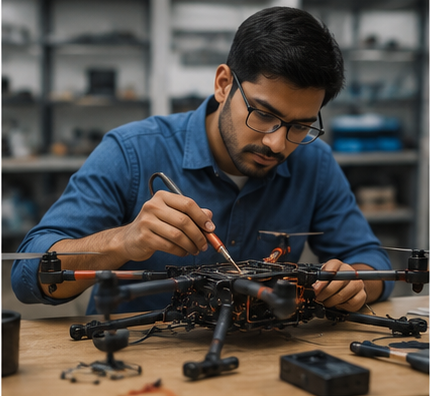

Wings Of The Future: Exploring Drones & Flight Science
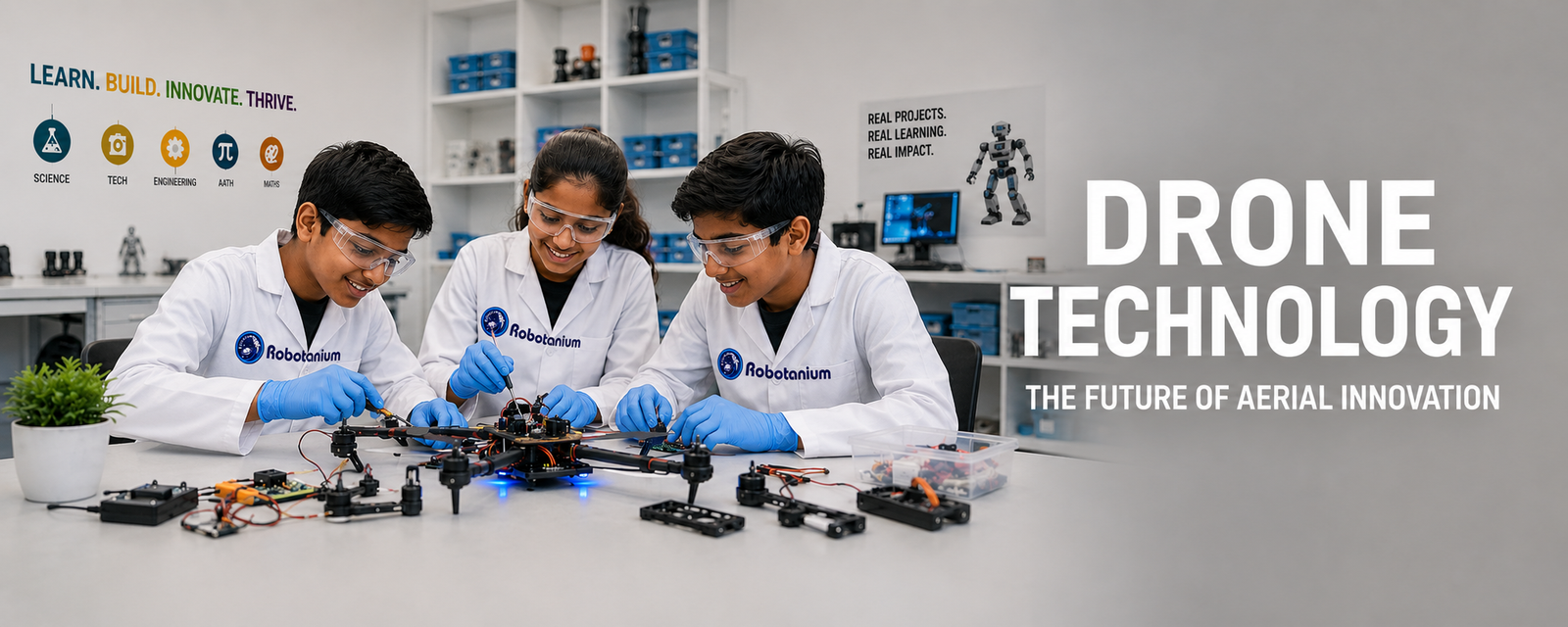
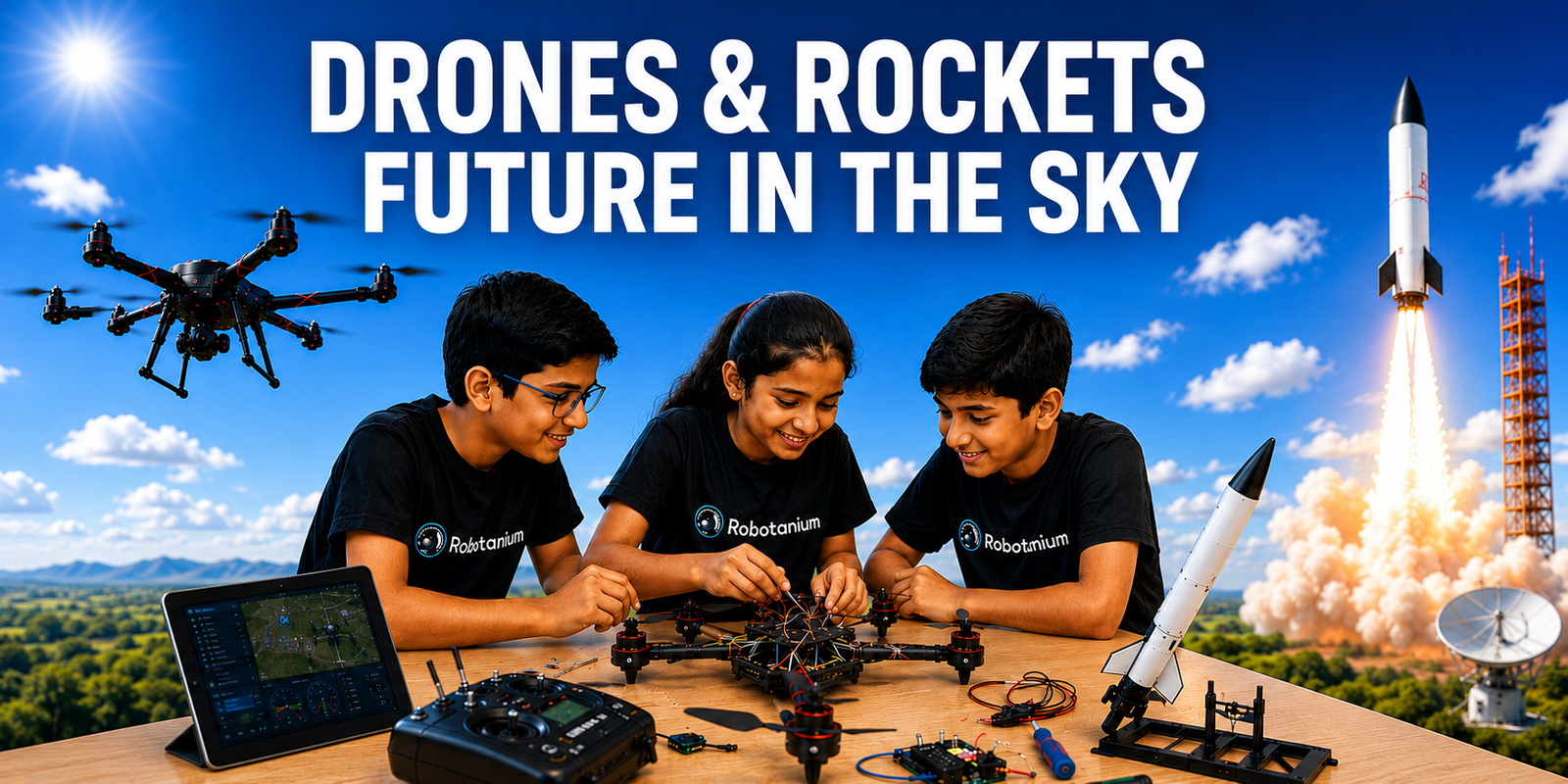
Step into the fascinating world of drones, rockets, and aerospace innovation through an exciting hands-on STEM learning experience designed for young explorers and future innovators. This program introduces students to the science behind flight — how drones fly, how rockets launch, and how modern aerial technologies are transforming industries and space exploration. Through interactive demonstrations, working models, and engaging activities, students will explore the principles of aerodynamics, including lift, thrust, drag, and balance.
The program encourages creativity, problem-solving, and practical STEM learning while helping students develop curiosity, teamwork, and scientific thinking. By connecting classroom concepts with real-world applications, the program inspires students to explore future-ready skills in aviation, robotics, and space science.


Drone Program Overview
Discover the exciting world of drones through an engaging, hands-on learning experience designed to introduce students to modern aerial technology and the science of flight.
What Is a Drone?
Learn what drones are, how they operate, and why they are becoming an important part of today’s technology. Students will explore different types of drones and their basic functions.
Drone Parts And Controls
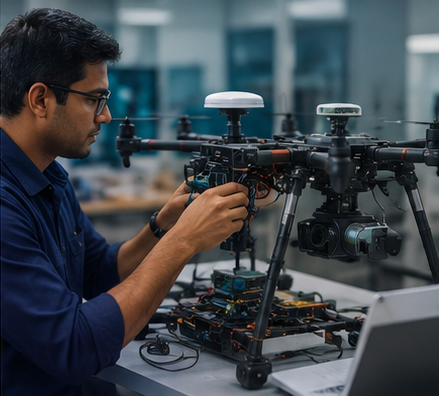
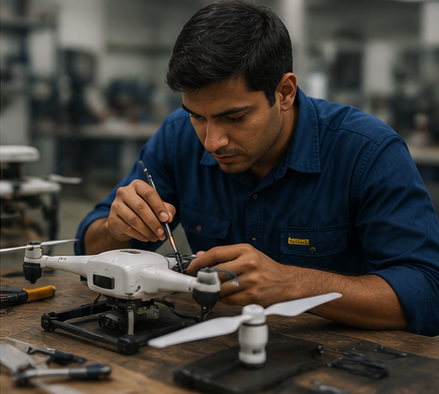
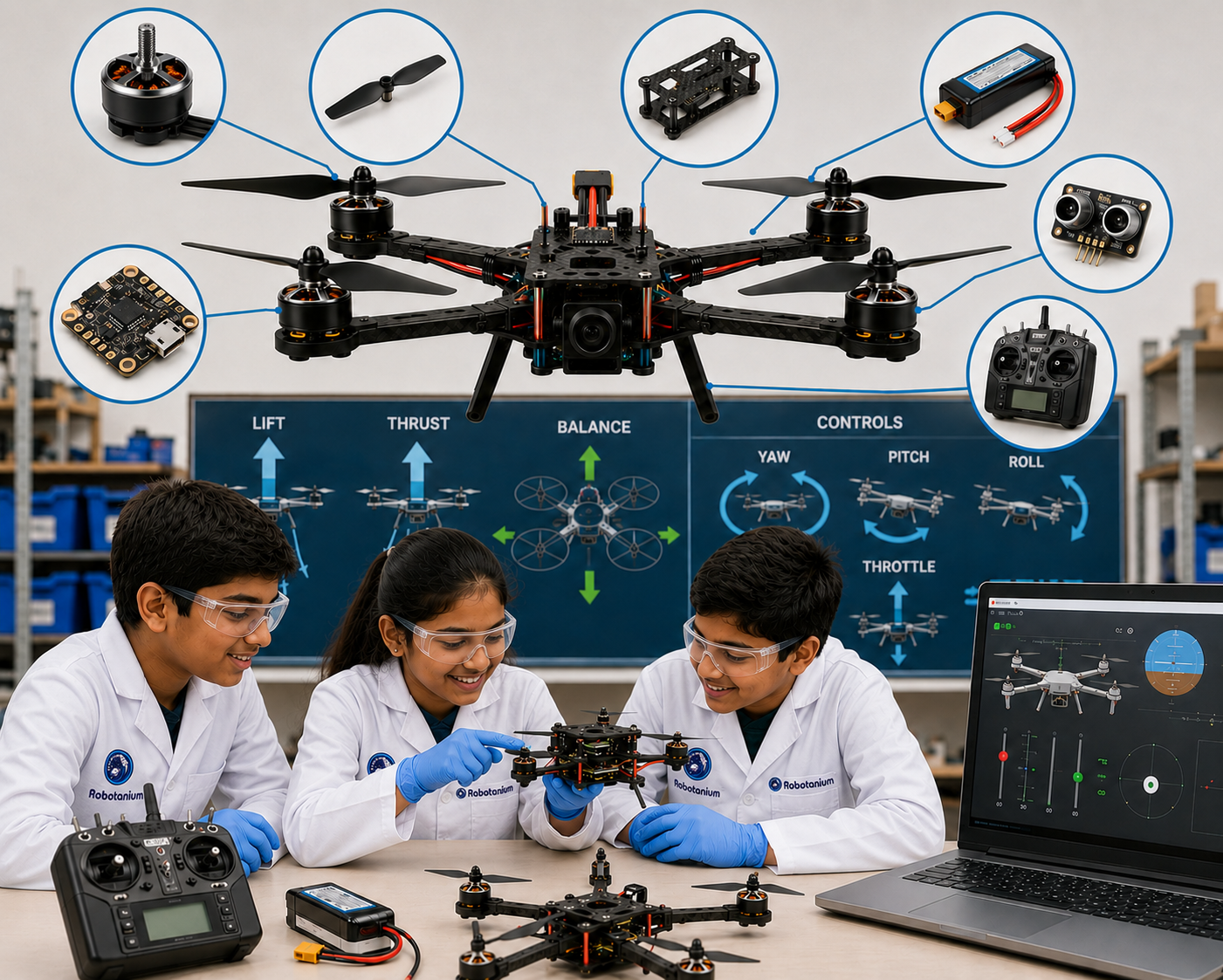
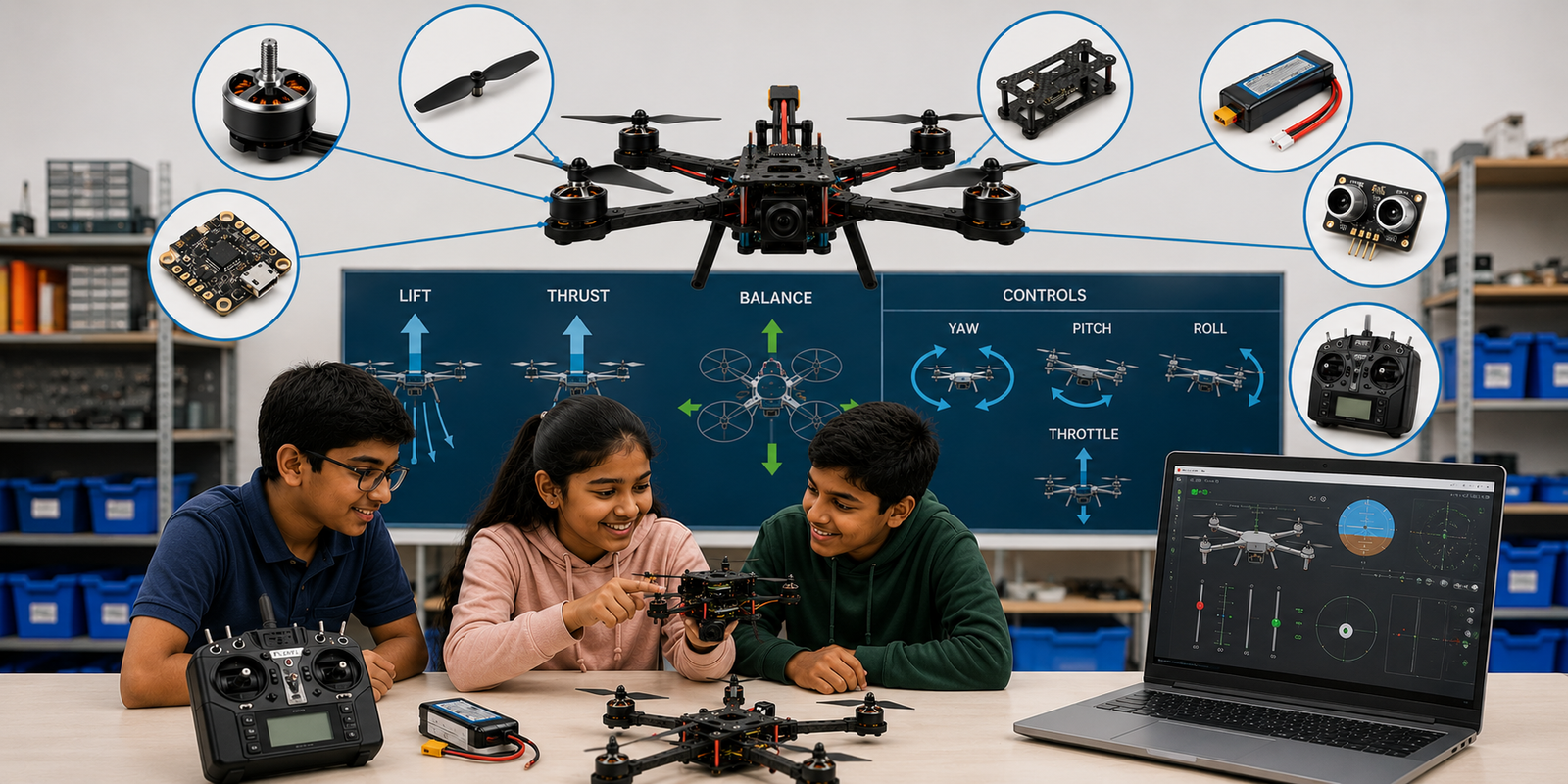
Understand the key components of a drone, including motors, propellers, batteries, sensors, and controllers. Students will also learn how pilots control drone movement and navigation.
Basics of Flight: Lift, Thrust, and Drag
Explore the science behind how drones fly by understanding essential aerodynamic principles such as lift, thrust, drag, and balance through simple demonstrations and activities.
Real-Life Applications of Drones
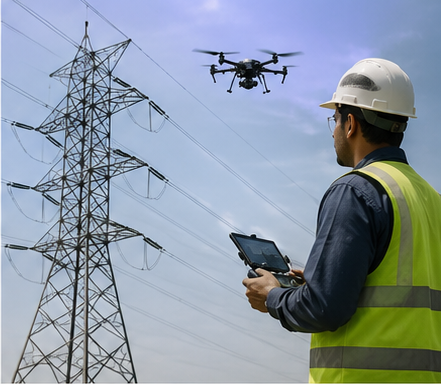
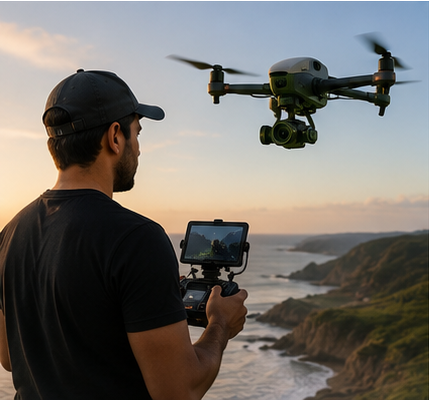
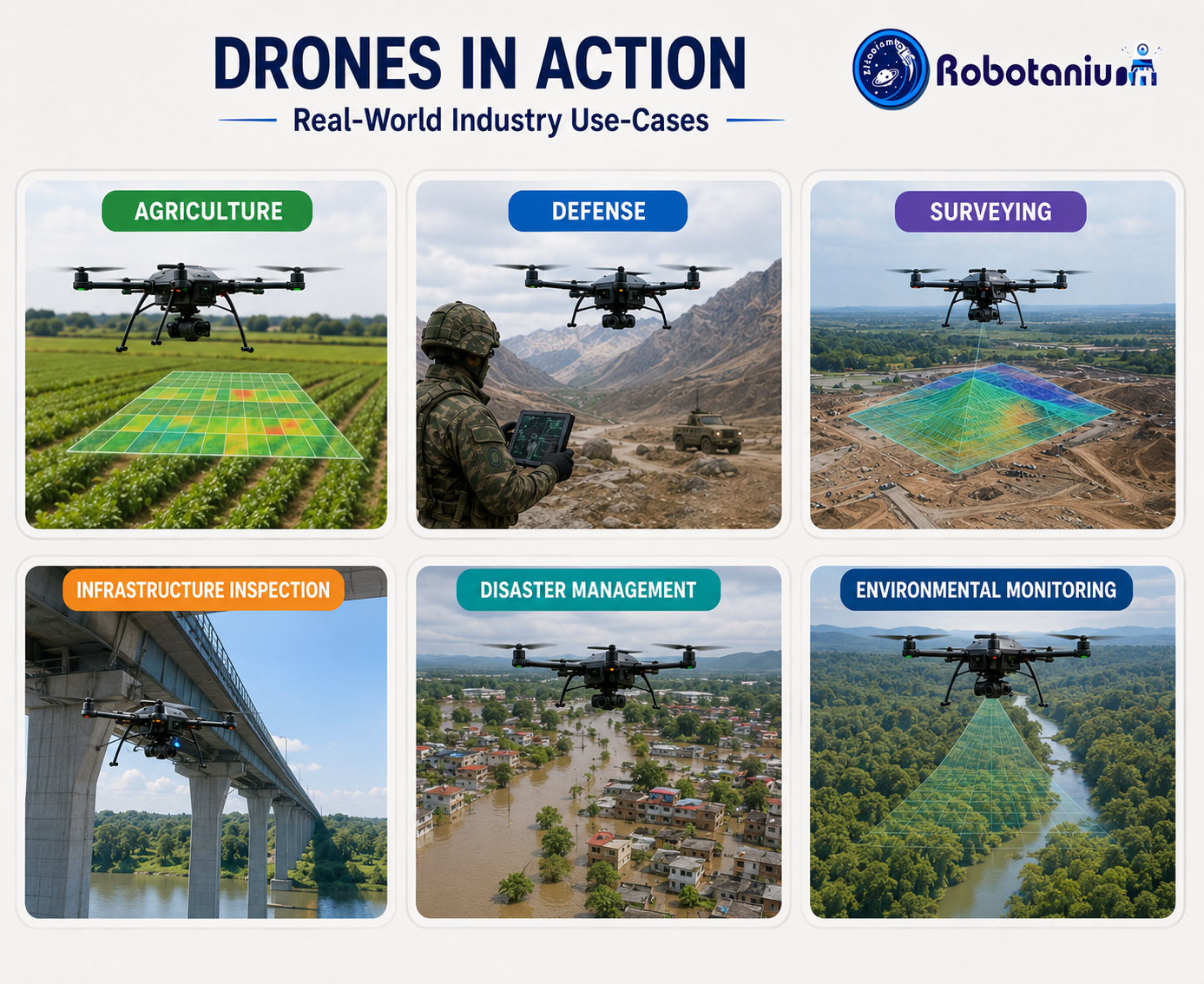
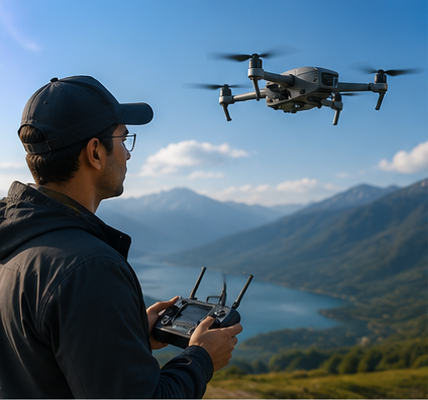
Discover how drones are used in real-world industries such as Agriculture, Photography, delivery services, disaster management, surveillance, and Aerospace Engineering—showing students the future possibilities of drone technology.
What Students Will Learn
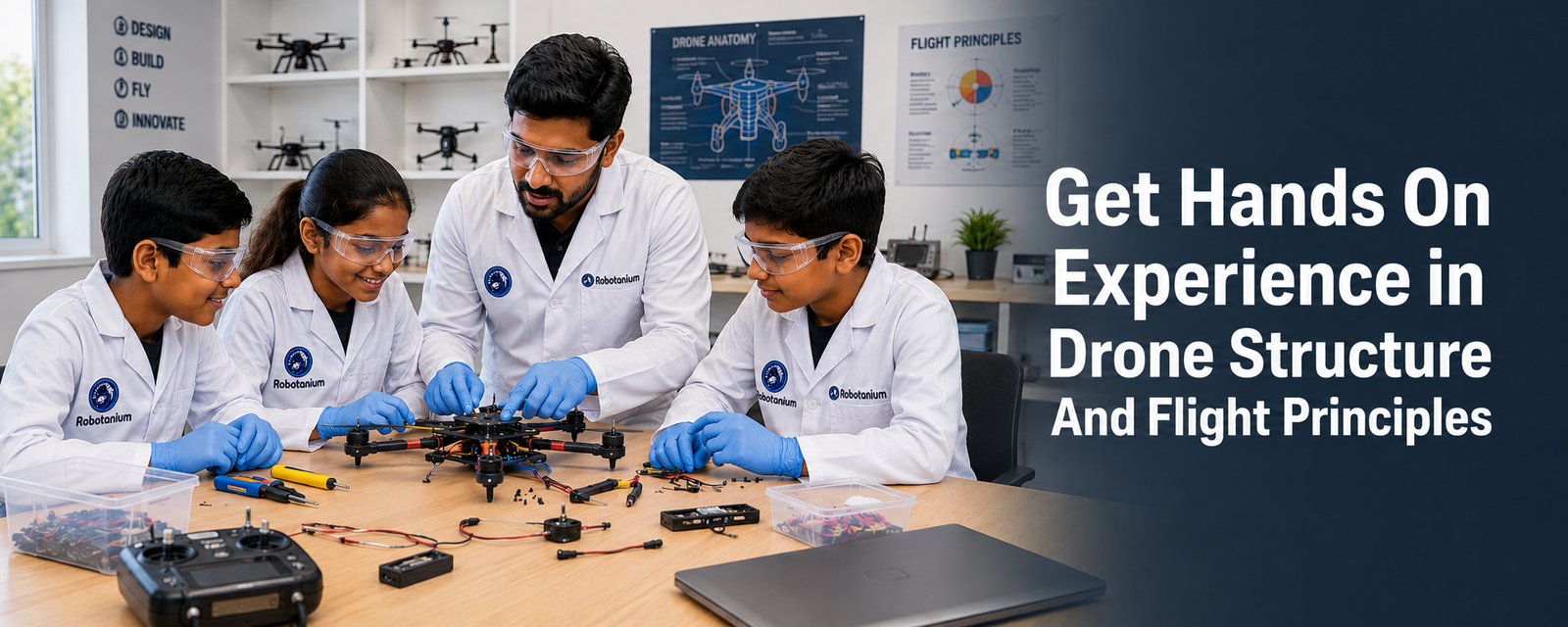
Drone Structure and Flight Principles
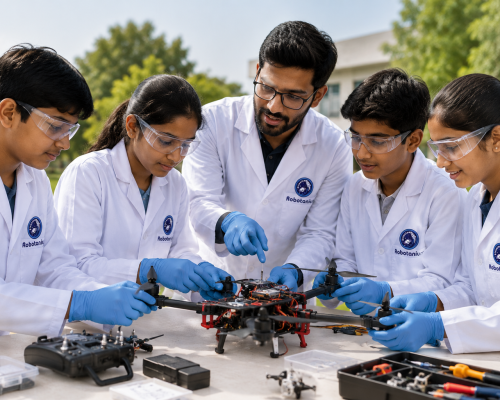
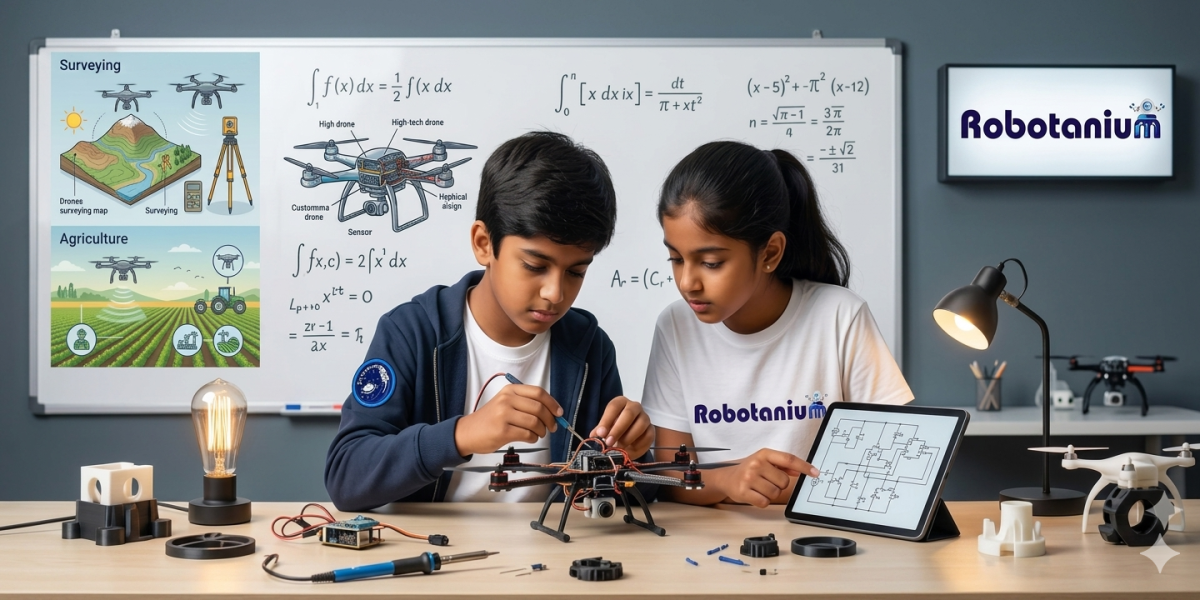
Students will learn about the important parts of a drone, including motors, propellers, batteries, and sensors. They will understand how drones fly using the principles of lift, thrust, drag, and balance. Interactive demonstrations will explain how drone controls affect movement and stability in the air. Students will observe how drones hover, rotate, ascend, descend, and change direction during flight. The program will introduce basic aerodynamics and the science behind modern drone technology. Hands-on activities will help students connect theoretical concepts with practical flight operations.
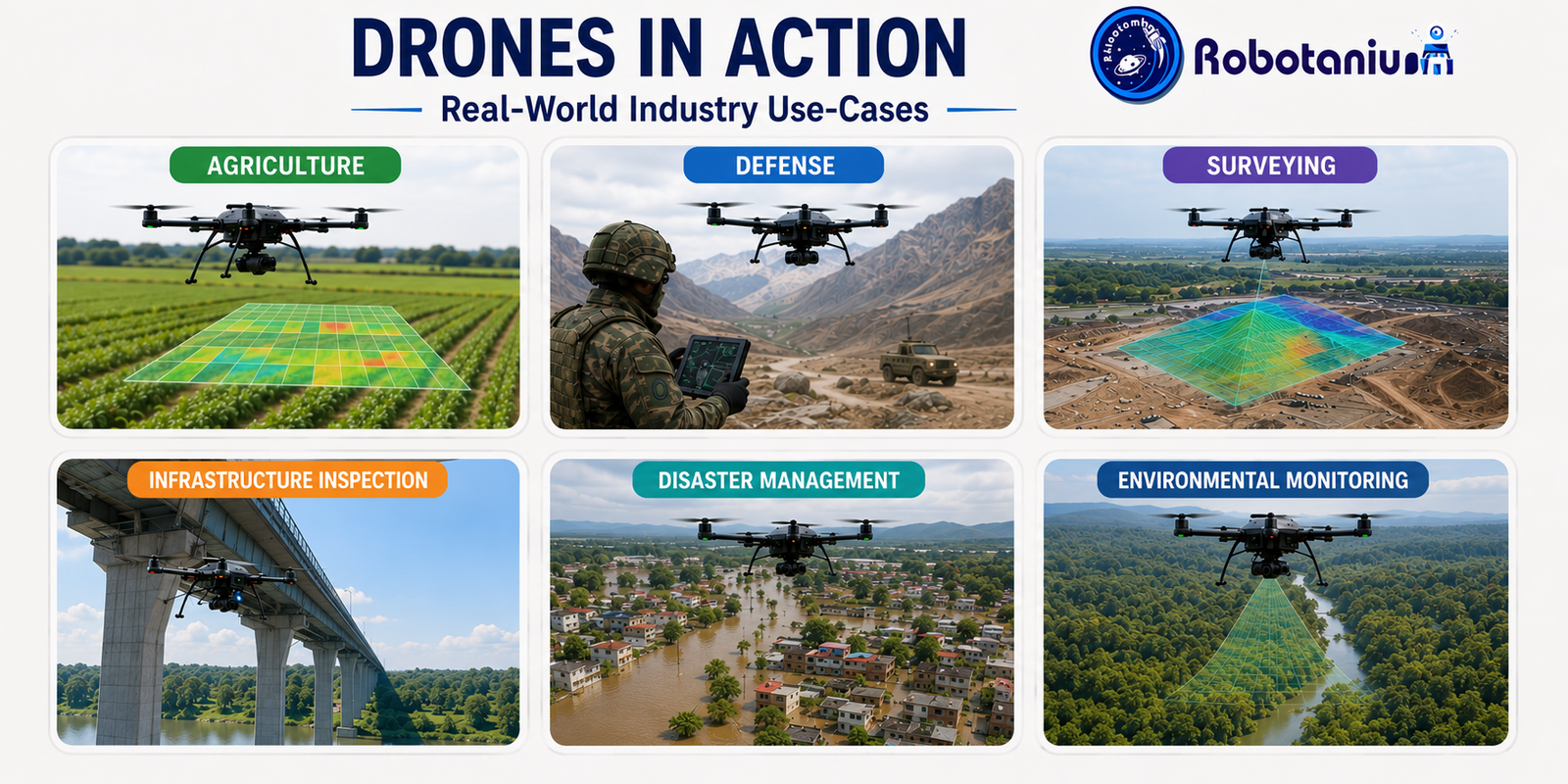
Industry Use-Cases: Agriculture, Defense, Surveying
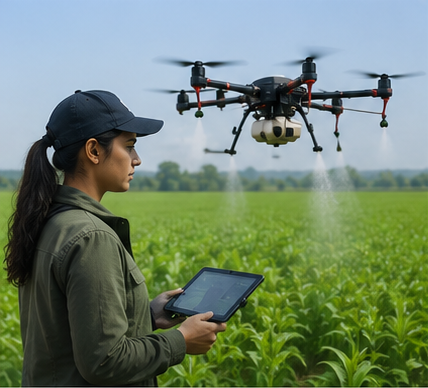
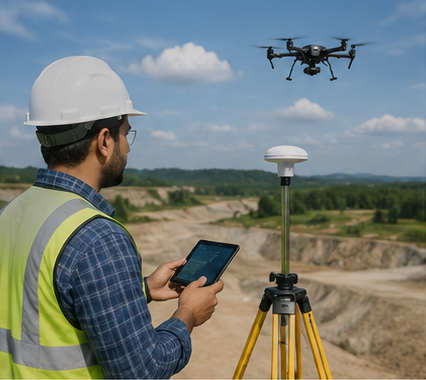
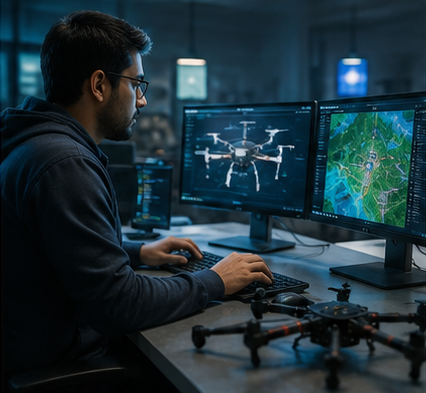
Students will explore how drones are used in agriculture for crop monitoring and field management. They will learn how drones support defense operations through surveillance and aerial observation. The session will explain the role of drones in land surveying, mapping, and construction planning. Real-world examples will demonstrate how drones improve speed, safety, and efficiency across industries. Students will understand how aerial data collection helps professionals make accurate decisions. These applications will show the growing importance of drones in modern technology and innovation.
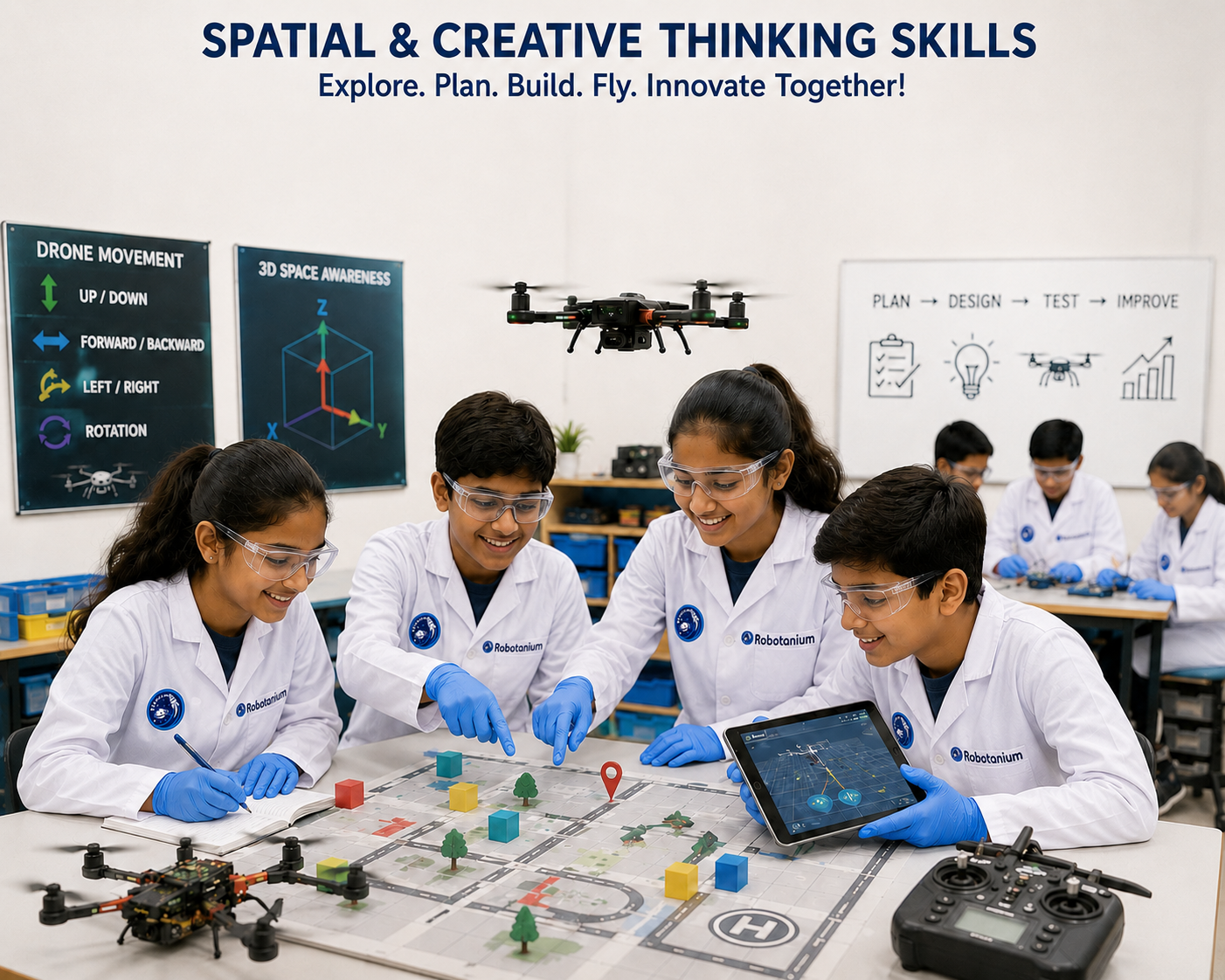
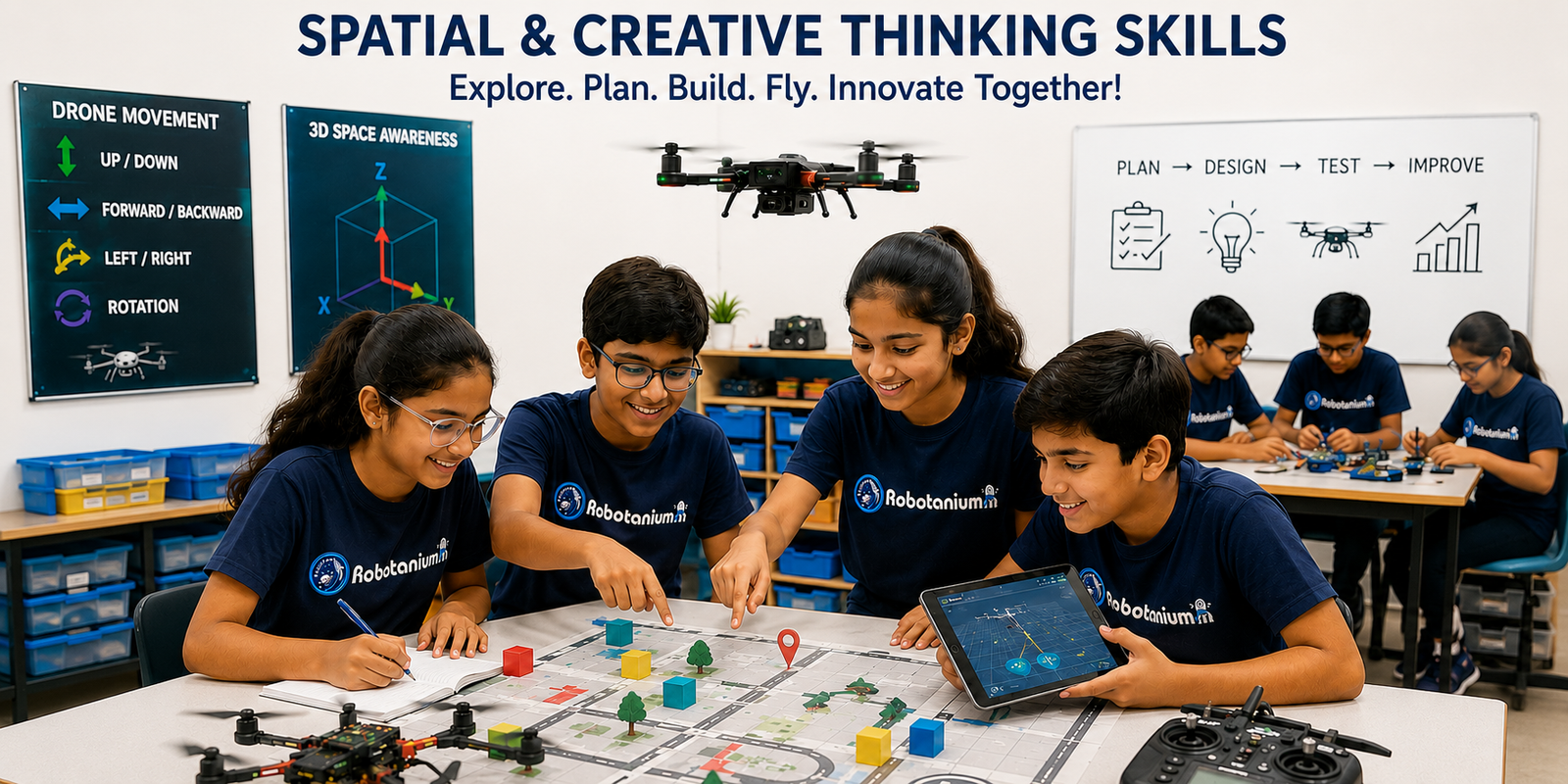
Spatial and Creative Thinking Skills
Students will develop spatial awareness through drone observation and interactive learning activities. They will improve their understanding of direction, movement, distance, and positioning in space. Creative challenges will encourage logical thinking and problem-solving using drone concepts. Hands-on experiences will strengthen coordination, planning, and decision-making abilities. Students will work on activities that promote teamwork, communication, and innovative thinking. These exercises will help build confidence and curiosity while making STEM learning engaging and practical.
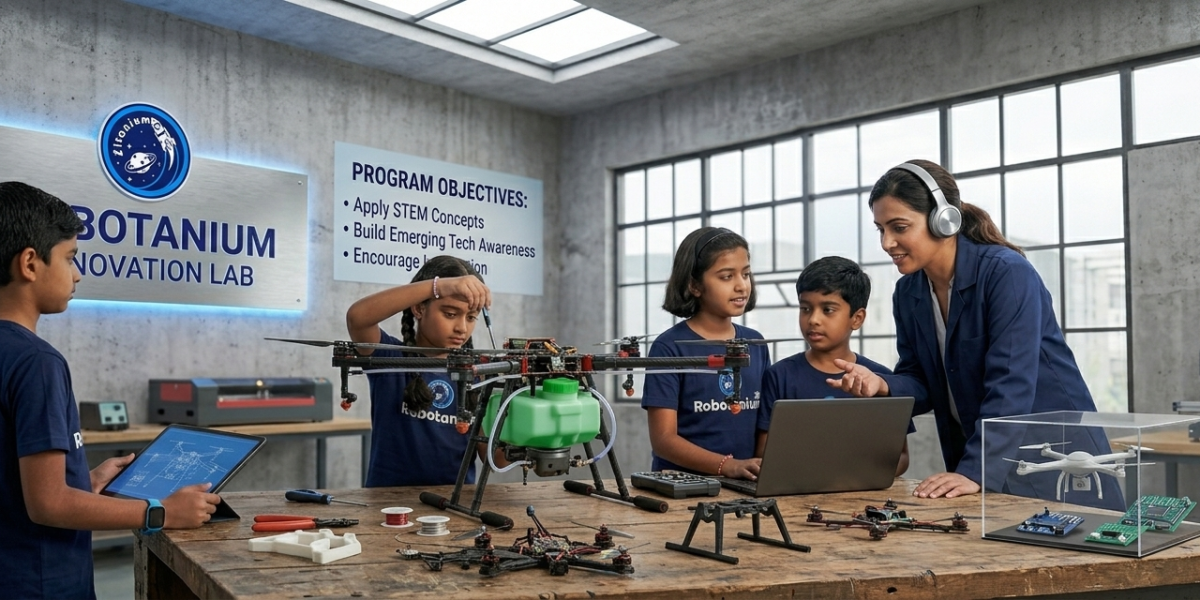
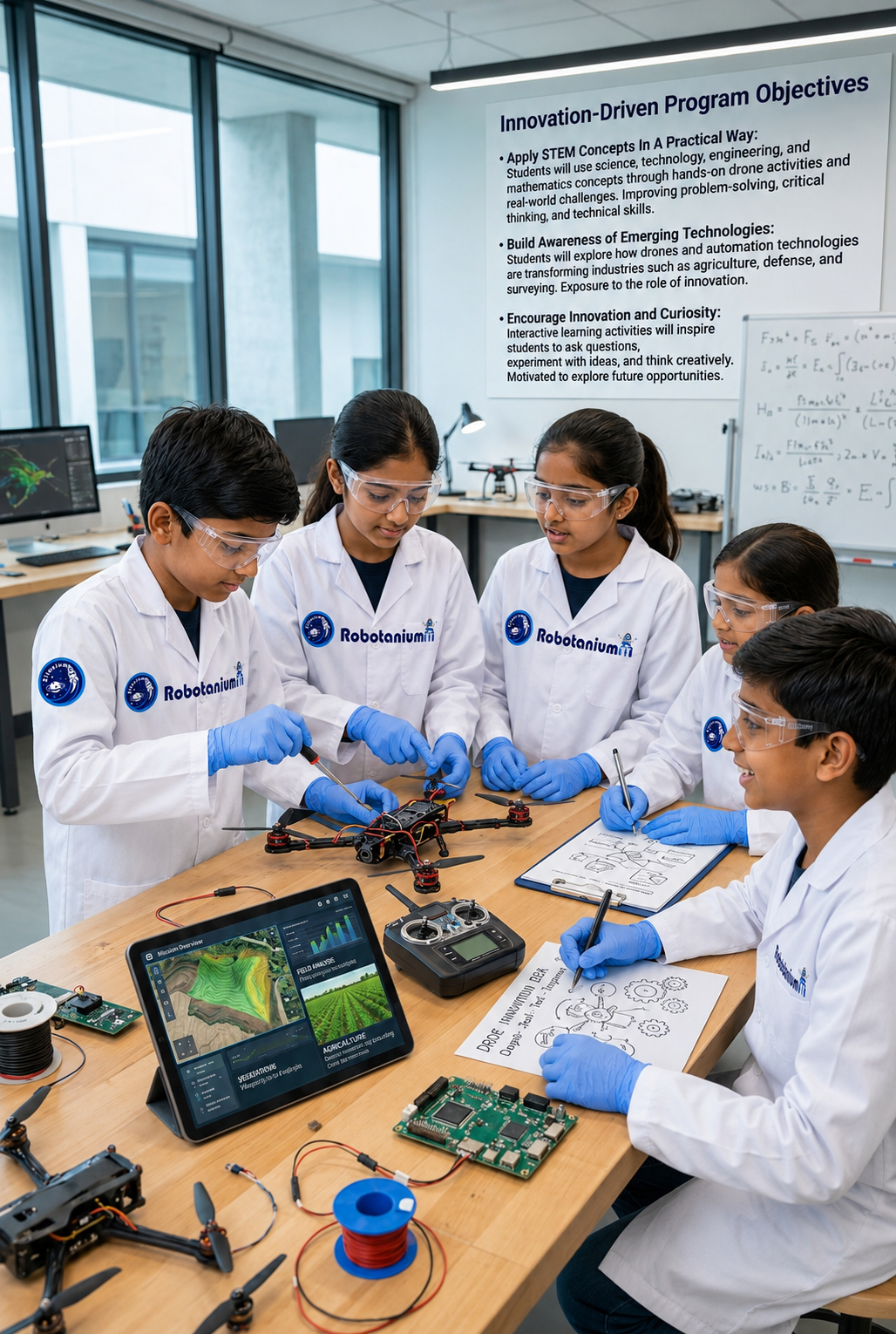
Innovation-Driven Program Objectives


-
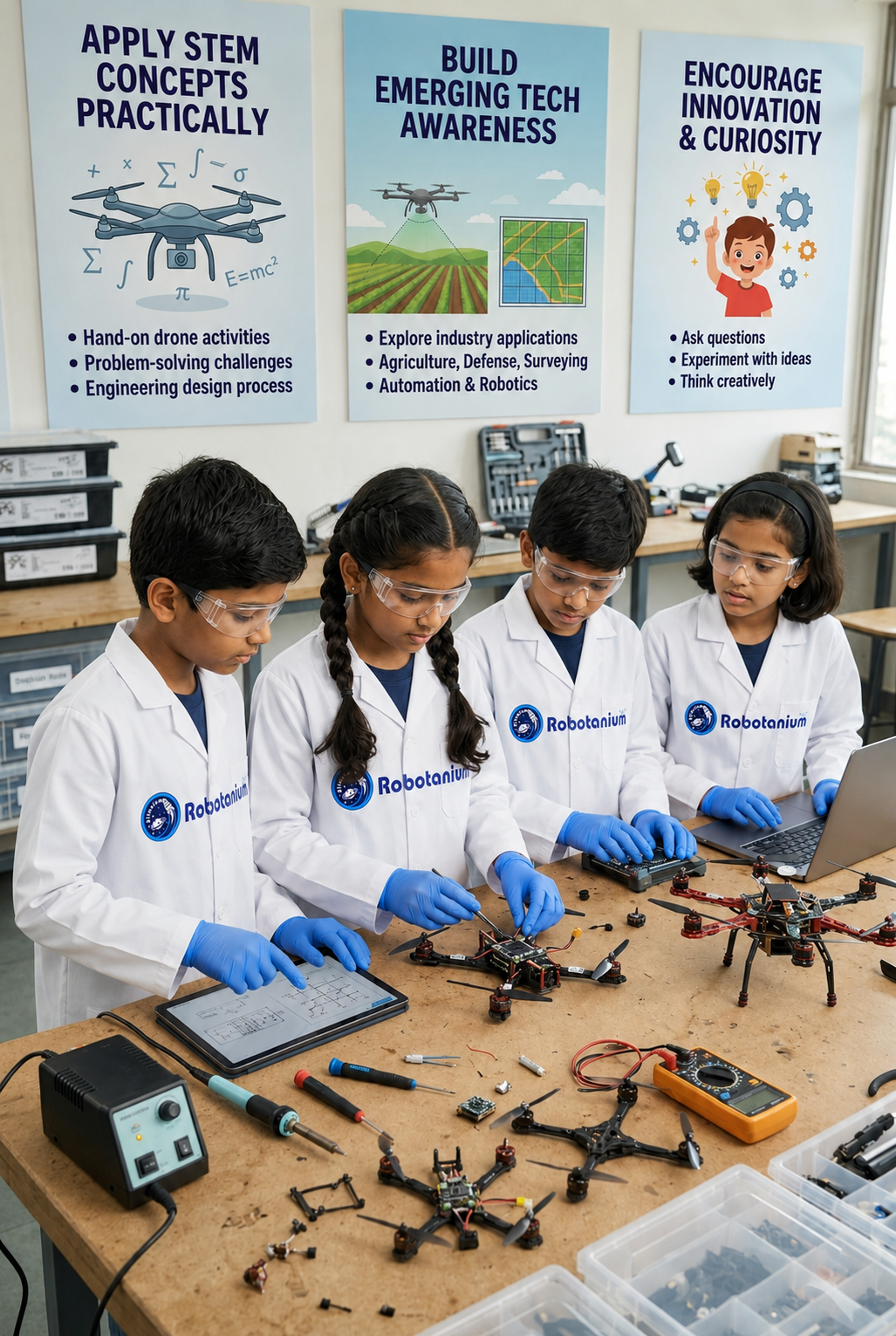
Apply STEM Concepts In A Practical Way:
Students will use science, technology, engineering, and mathematics concepts through hands-on drone activities and real-world challenges. These practical experiences help improve problem-solving, critical thinking, and technical skills. -
Build Awareness of Emerging Technologies:
Students will explore how drones and automation technologies are transforming industries such as agriculture, defense, and surveying. This exposure helps them understand the growing role of innovation in the modern world. -
Encourage Innovation and Curiosity:
Interactive learning activities will inspire students to ask questions, experiment with ideas, and think creatively. The program encourages curiosity and motivates students to explore future opportunities in STEM fields.


Why Choose Robotanium?
Hands-on Drone Learning
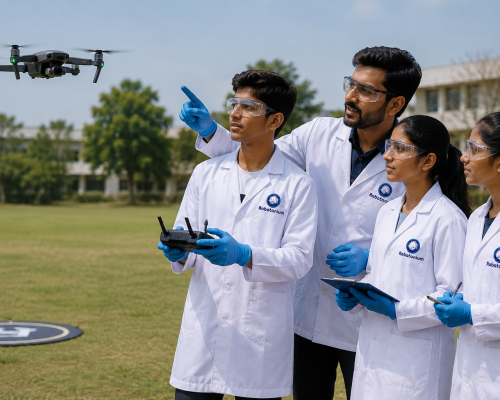
Students actively learn by flying drones, performing tasks, and participating in practical activities.
Experienced STEM Trainers
Our expert instructors simplify complex concepts through fun and engaging teaching methods.
Safe Learning Environment
Workshops are conducted with proper safety guidance and supervised hands-on sessions.
Creativity & Problem-Solving Skills
Activities encourage students to think critically, innovate, and solve challenges creatively.
Real-World Industry Exposure
Students discover how drones are used in agriculture, defense, surveying, and other industries.
Future-Ready Technology Skills
The program introduces emerging technologies that prepare students for future STEM careers.
Quality Equipment & Resources
Students learn using professional training drones and interactive educational materials.
Confidence & Curiosity Building
The workshop inspires students to explore technology with confidence and curiosity
Fun & Interactive Experience
Learning is made exciting through teamwork, challenges, and engaging drone activities