
Game Development for Kids

Learn Game Development. Build Games. Create Your Own Worlds.

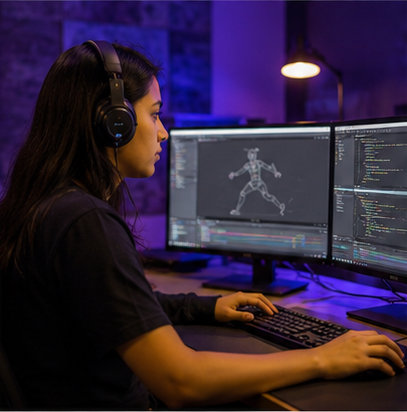
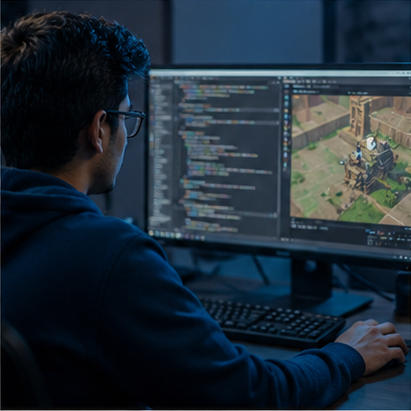
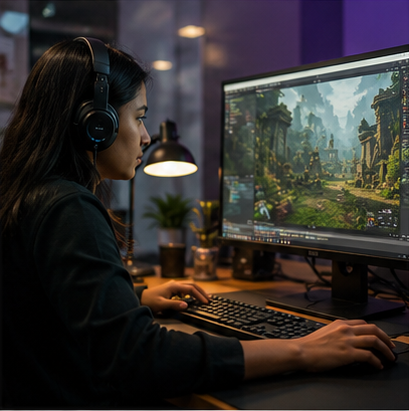
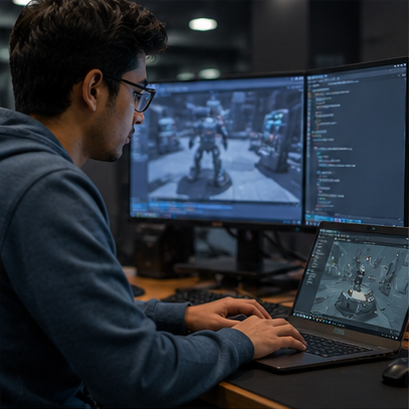
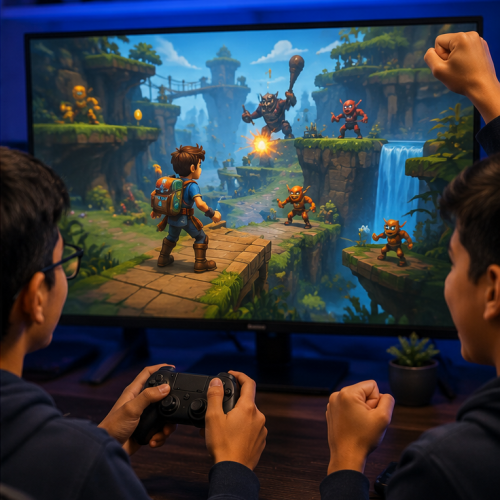
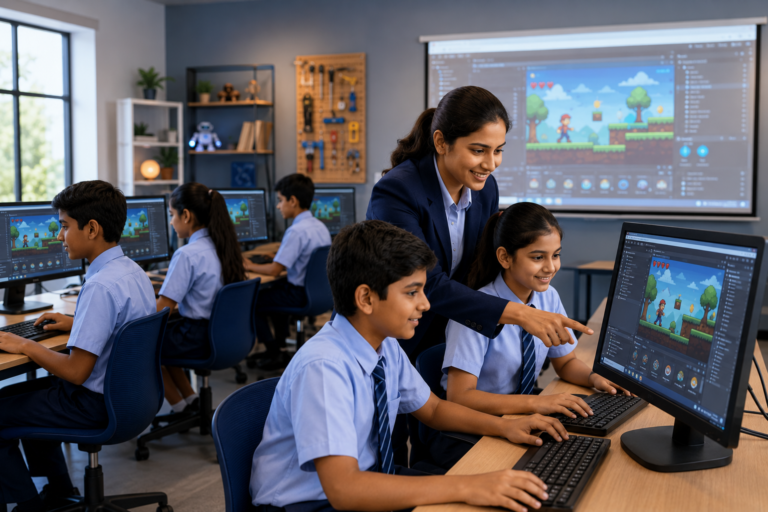
Introduce students to the exciting world of Game Development through fun, hands-on game creation projects. Our age-appropriate program helps children understand how games are designed, programmed, and made interactive using game engines, coding, game mechanics, and digital design. 

What Students Learn in Game Development

From game design and programming to characters, levels, and interactive gameplay, students explore game development through hands-on learning and creative projects.

Game Design Fundamentals

Learn how games are planned using characters, objectives, rules, challenges, levels, and gameplay mechanics.

Game Programming

Discover programming concepts such as variables, conditions, loops, functions, events, and logic to create interactive gameplay.

2D & 3D Game Development

Explore how to create 2D and 3D game environments with characters, objects, animations, and interactive elements.

Game Physics

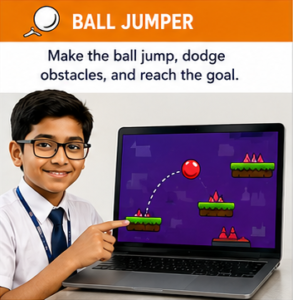
Understand movement, gravity, collisions, jumping, acceleration, and physics concepts that make gameplay realistic and engaging.

Characters & Level Design

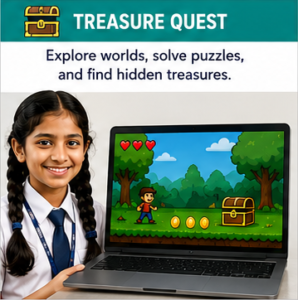
Design game characters, environments, obstacles, missions, and levels that challenge players and create exciting experiences.

Interactive Game Projects

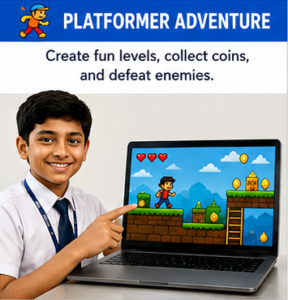
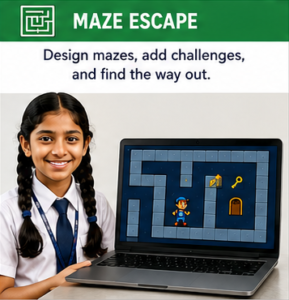
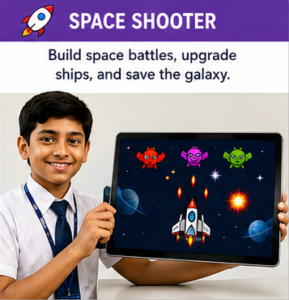
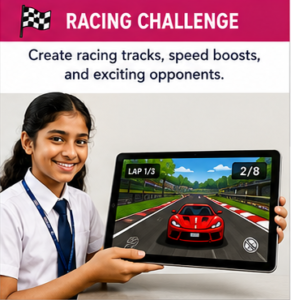
Create projects such as racing games, platform games, puzzle games, space adventures, arcade games, and interactive challenges.

Level Up Your Game Development Skills

Progress from game design fundamentals to advanced programming, 2D & 3D development, AI-driven gameplay, and real-world game projects.

Level 1

Grades 5-7

Beginner

  • Game Design Basics
  • 2D Game Creation
  • Characters & Game Objects
  • Simple Game Projects

Level 2

Grades 8-10

Intermediate

  • Game Programming
  • Game Mechanics & Physics
  • 2D & 3D Game Development
  • Interactive Game Projects

Level 3

Grades 11-12

Advanced

  • Advanced Game Programming
  • 3D Game Development
  • AI & Game Behaviour
  • Real-World Game Projects

Why Learn Game Development Today

Build Your Own Games

Develop creativity, logical thinking, and problem-solving skills while turning ideas into exciting, playable games.

Master Coding & Game Logic

Learn programming, game mechanics, and computational thinking through hands-on projects and engaging challenges.

Create Interactive Worlds

Transform ideas into characters, levels, and interactive experiences while building practical skills and confidence.

Hands-On Game Development Projects

Imagine It. Code It. Play It.

Turn ideas into playable experiences! Students design characters, build game worlds, create exciting challenges, and bring their ideas to life through hands-on game development projects that sharpen creativity, coding, logic, problem-solving, and digital skills.

Game Development Projects & Challenges

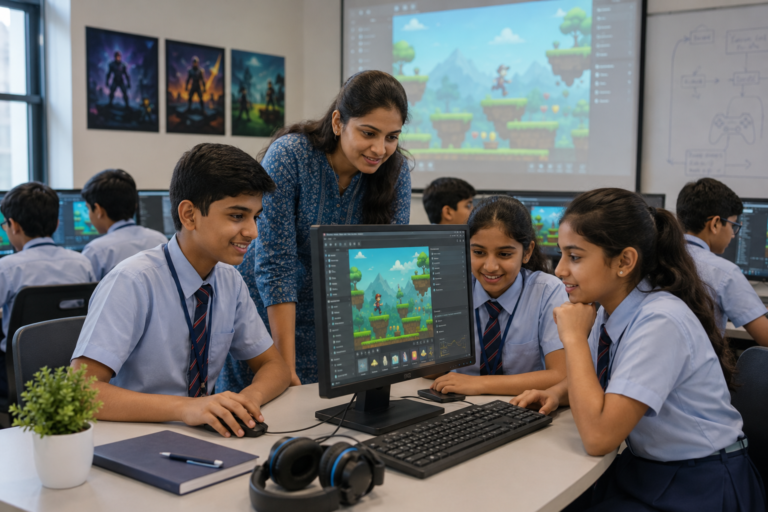
Learning becomes more exciting when students turn their ideas into playable experiences. In Robotanium’s Game Development Workshops, students take on creative challenges involving game design, coding, characters, levels, gameplay mechanics, interactive storytelling, and problem-solving—building games while learning how the ideas behind their favourite games come to life.

Build Your First Game

Imagine. Create. Play.

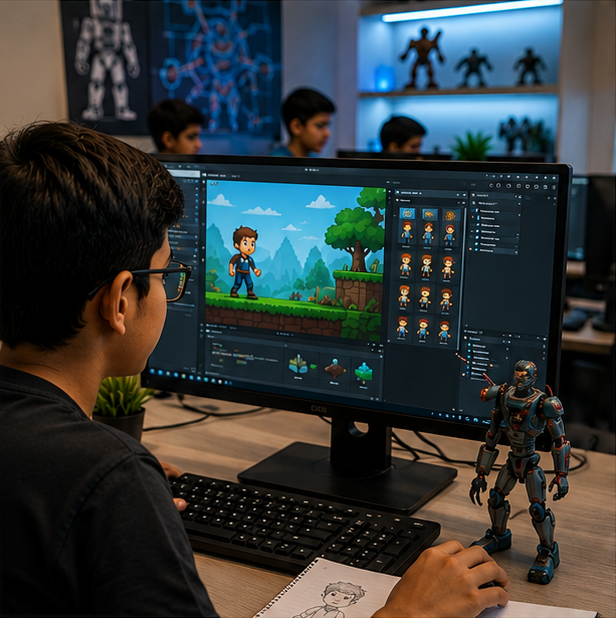
Students design their first playable game by creating characters, environments, goals, and simple gameplay mechanics while learning the foundations of game development.

Interactive Game Challenge

Code. Control. Conquer.

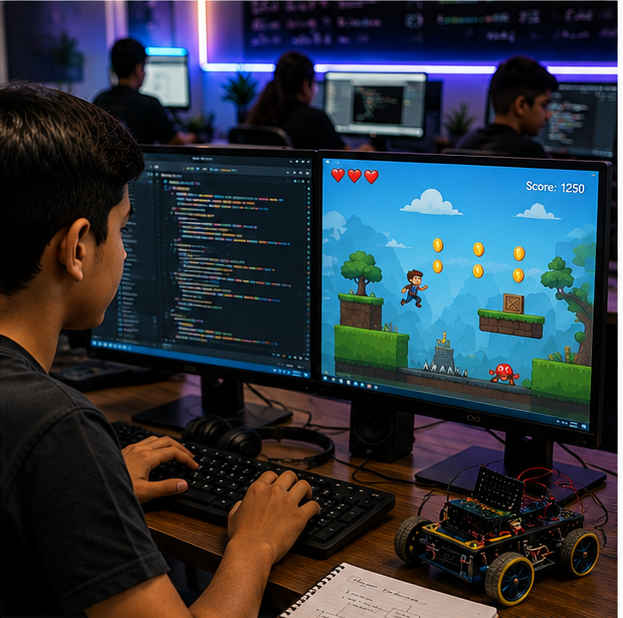
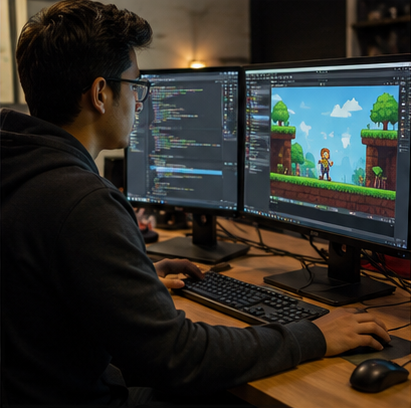
Students add player controls, scoring, obstacles, animations, sounds, and interactive elements while learning programming logic and how game mechanics work.

Game World Design Mission

Design. Build. Explore.

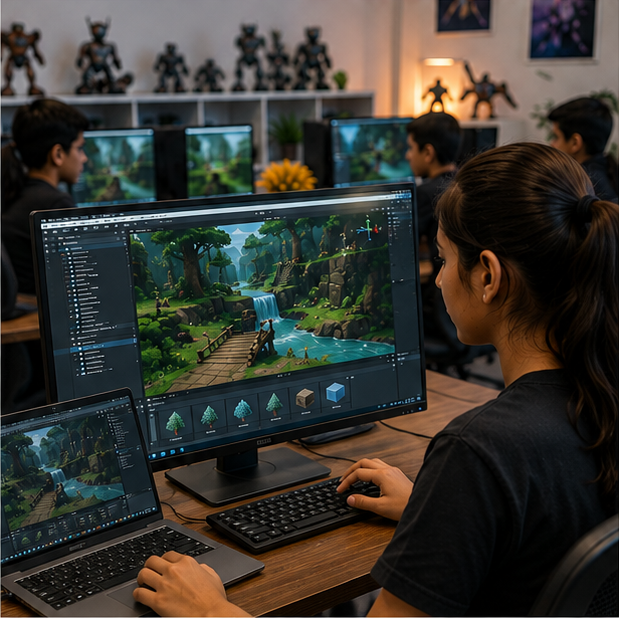
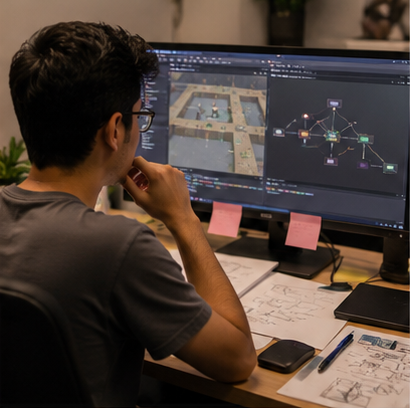
Students create immersive game levels with characters, challenges, environments, and missions while learning how thoughtful game design can turn an idea into an engaging player experience.

Future Careers in Game Development & Interactive Technologies

The skills students develop through game design, coding, digital art, animation, and programming can open doors to exciting careers across the interactive technology industry.

Game Developer
Create and program engaging games by combining gameplay mechanics, coding, characters, levels, and interactive experiences.
Game Developer
Game Designer
Design the rules, challenges, levels, gameplay mechanics, and overall player experience that make games fun and engaging.
Game Designer
3D Game Artist
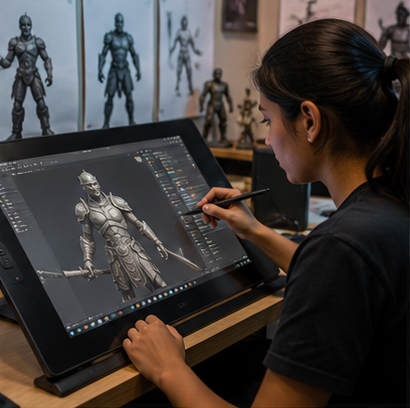
Build game environments, characters, objects, and visual assets that bring imaginative game worlds to life.
3D Game Artist
Game Animator
Create character movements, special effects, and dynamic animations that make games feel alive and responsive.
Game Animator
Gameplay Programmer
Develop the programming systems behind gameplay, physics, artificial intelligence, controls, and interactive game mechanics.
Gameplay Programmer
Game Experience Designer
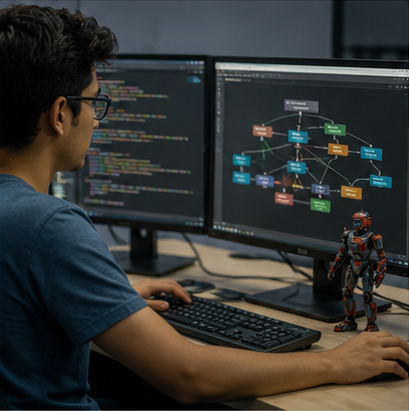
Design immersive game environments, characters, stories, and experiences that keep players engaged.
Game Experience Designer
Game AI Developer
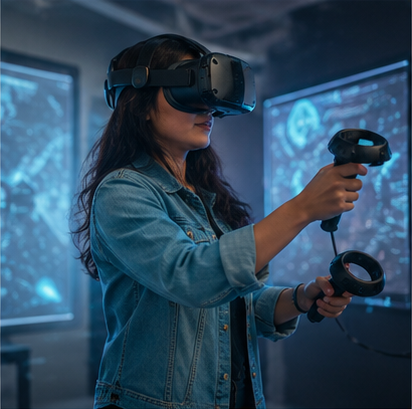
Create intelligent behaviours for characters, enemies, and game environments using algorithms and artificial intelligence.
Game AI Developer
XR Developer
Develop immersive experiences for virtual reality, augmented reality, simulations, and interactive digital environments.
XR Developer
Game Technology Engineer
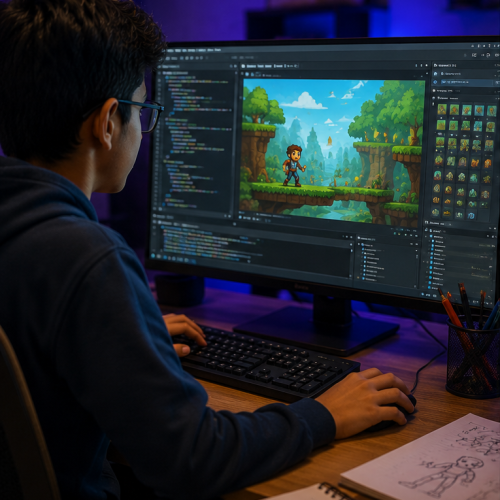
Build advanced gaming technologies, interactive applications, game engines, and next-generation digital experiences.
Game Technology Engineer

Frequently Asked Questions

What will students learn in the Game Development program?

Students learn game concepts, game mechanics, basic programming, character design, level creation, animations, problem-solving, and interactive storytelling.

Yes. Activities can be structured according to the student’s age and experience, starting with simple game concepts and progressing toward more advanced projects.

Yes. The focus is on learning by building. Students apply what they learn to create playable games and progressively more complex projects.

Absolutely. Game Development provides an engaging introduction to programming, digital design, interactive technology, and creative problem-solving—skills that can support further learning in technology and software development.

Contact Robotanium to learn about available Game Development programs, age groups, workshops, and enrollment options.

Turn Ideas Into Games

Create. Code. Play. Repeat.

Students discover how games come to life by creating characters, designing exciting levels, coding gameplay, and solving challenges. From their first simple game to interactive game worlds, they learn to think like both a game designer and a developer.