

Wings Of The Future: Exploring Drones & Flight Science

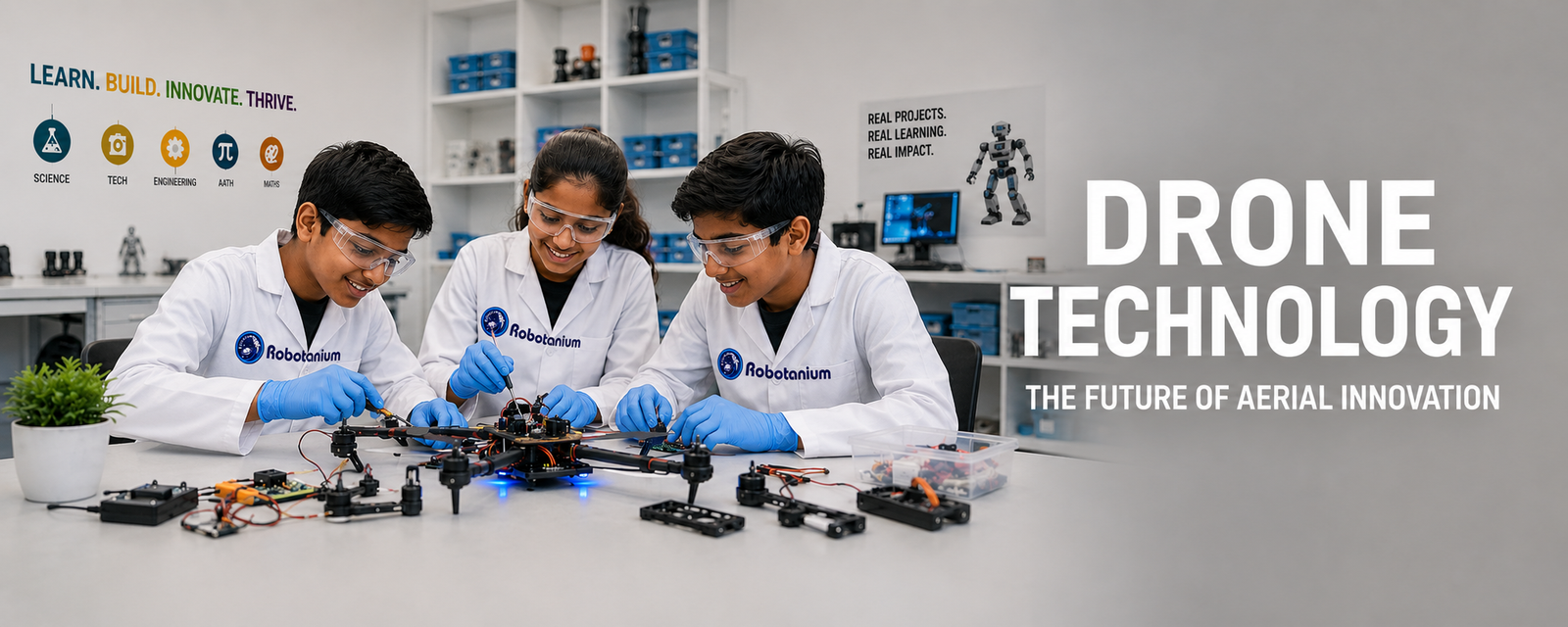
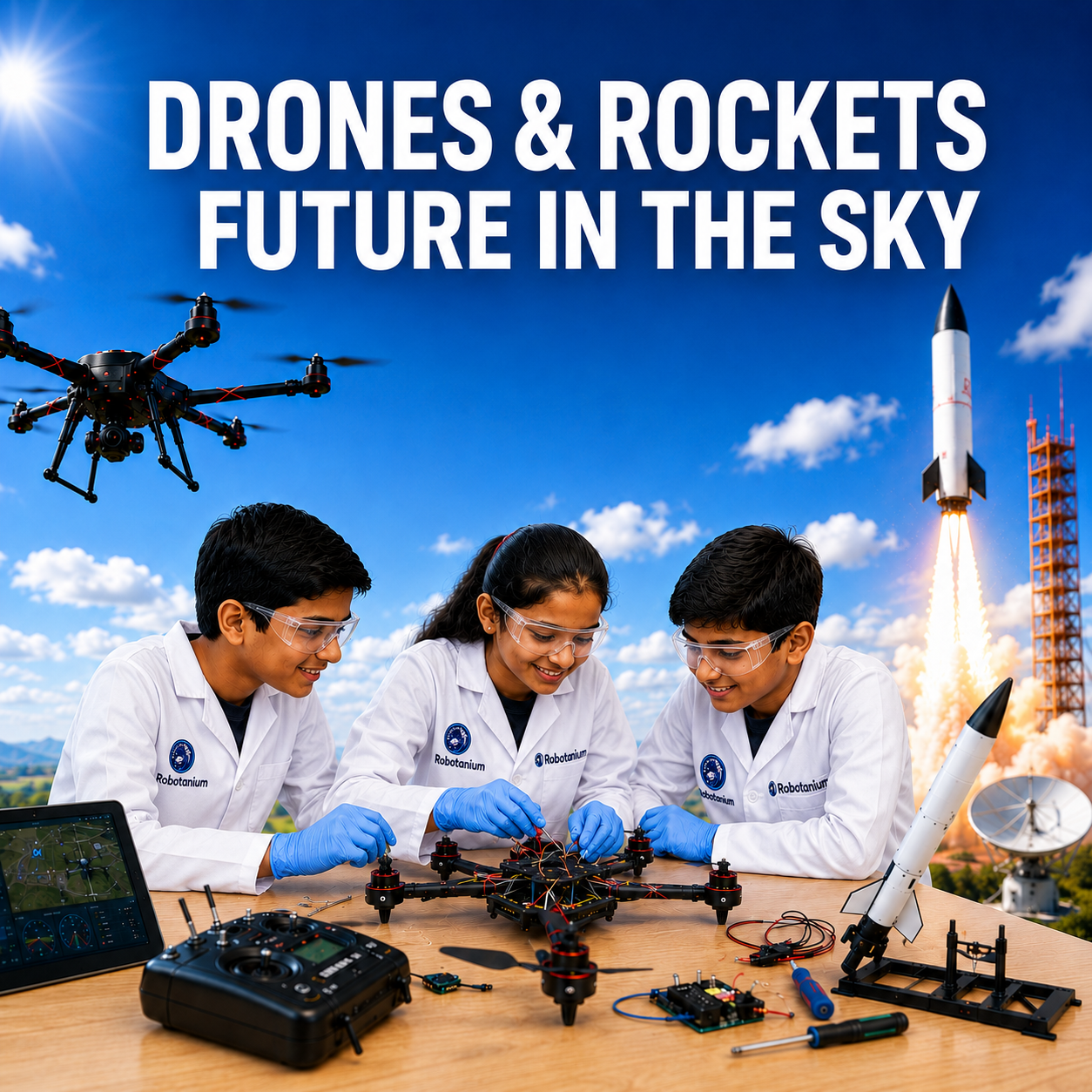
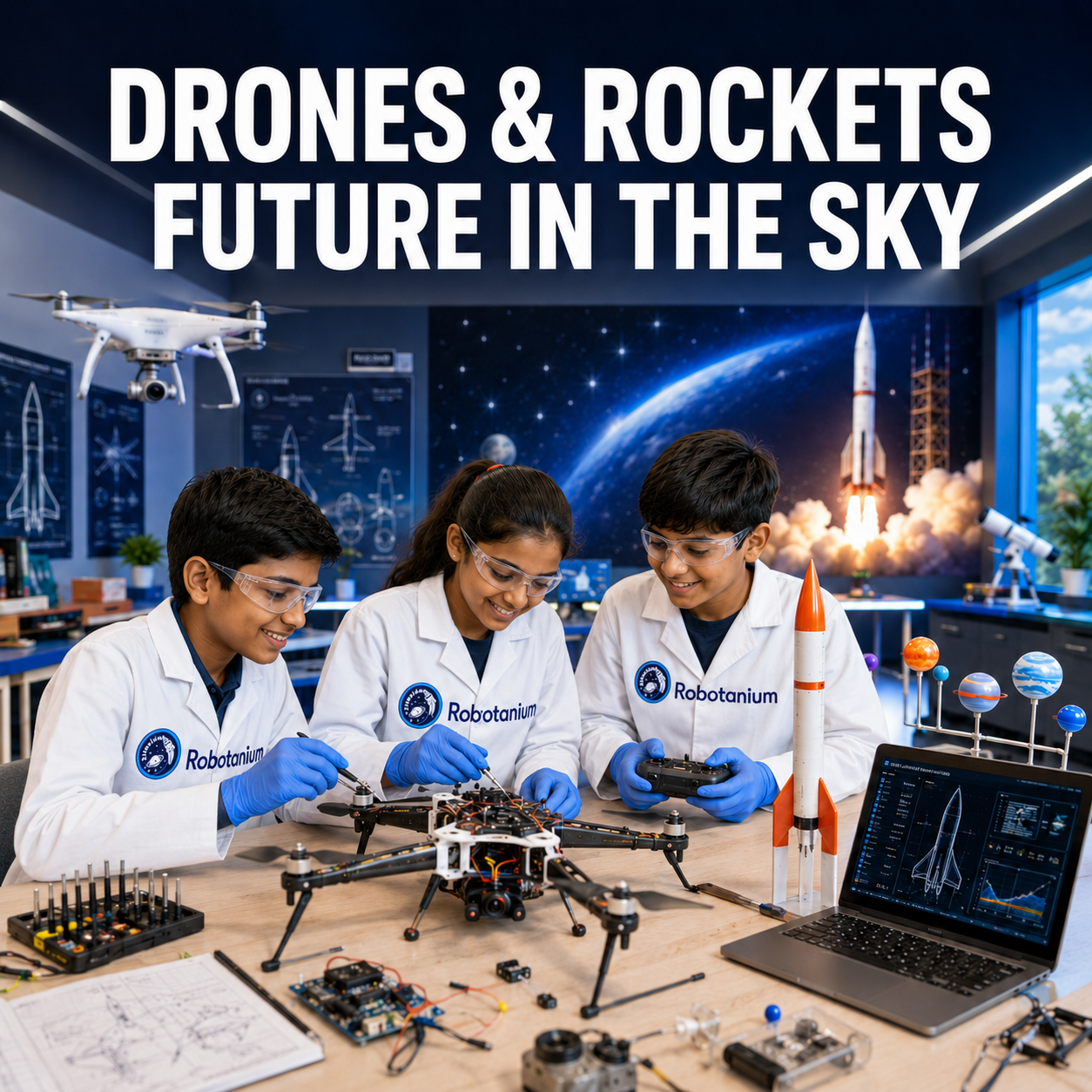
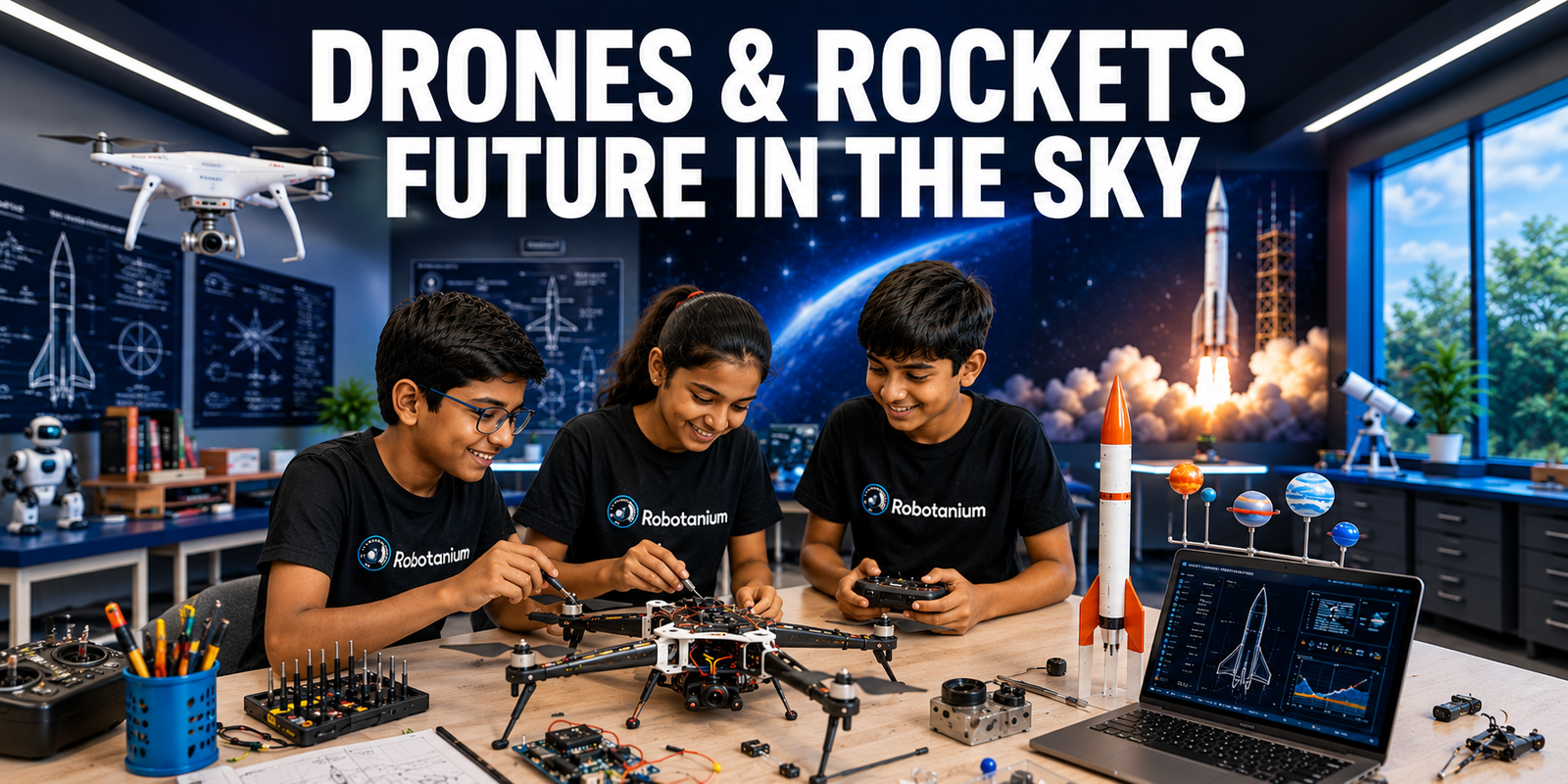
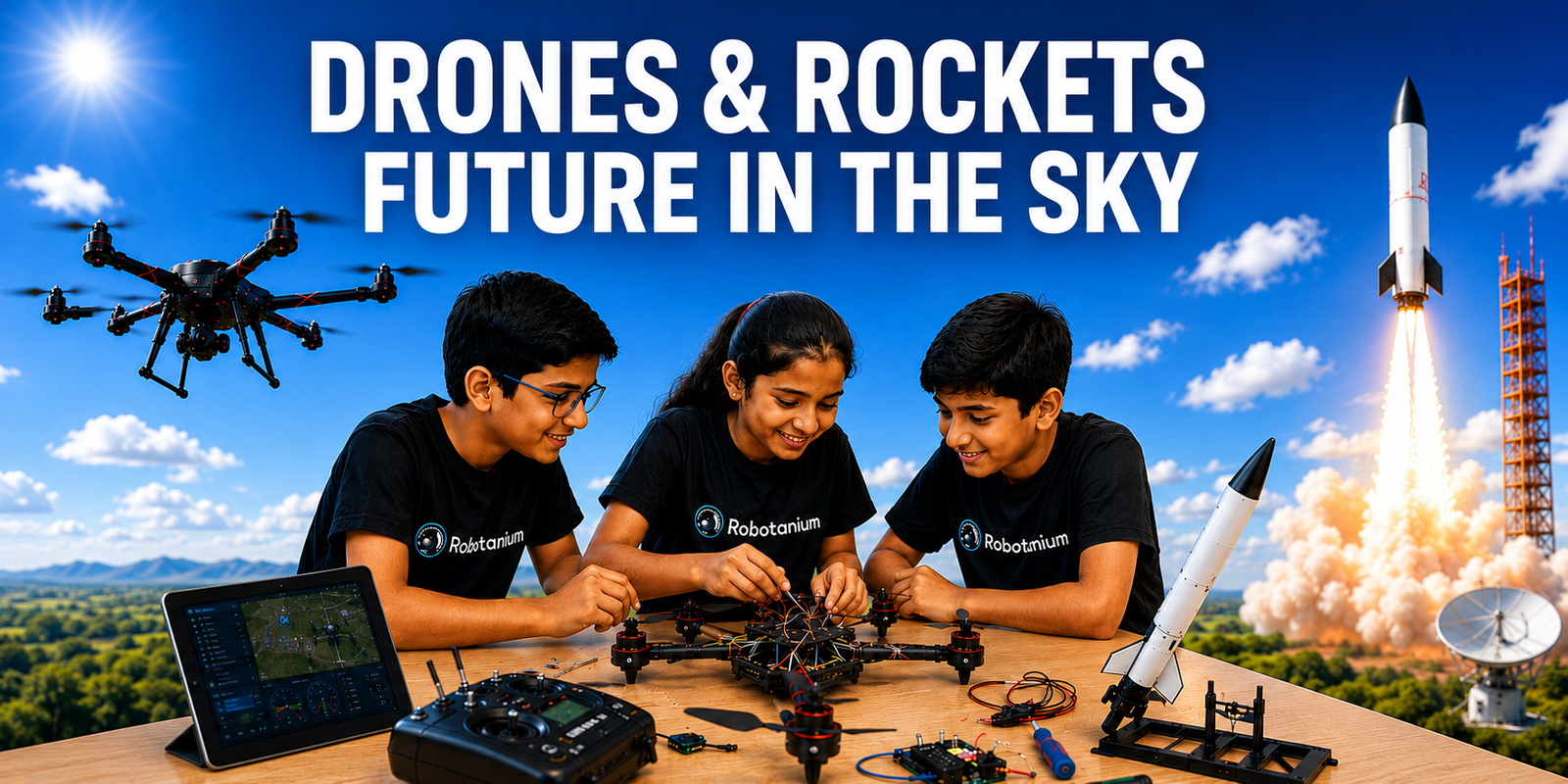
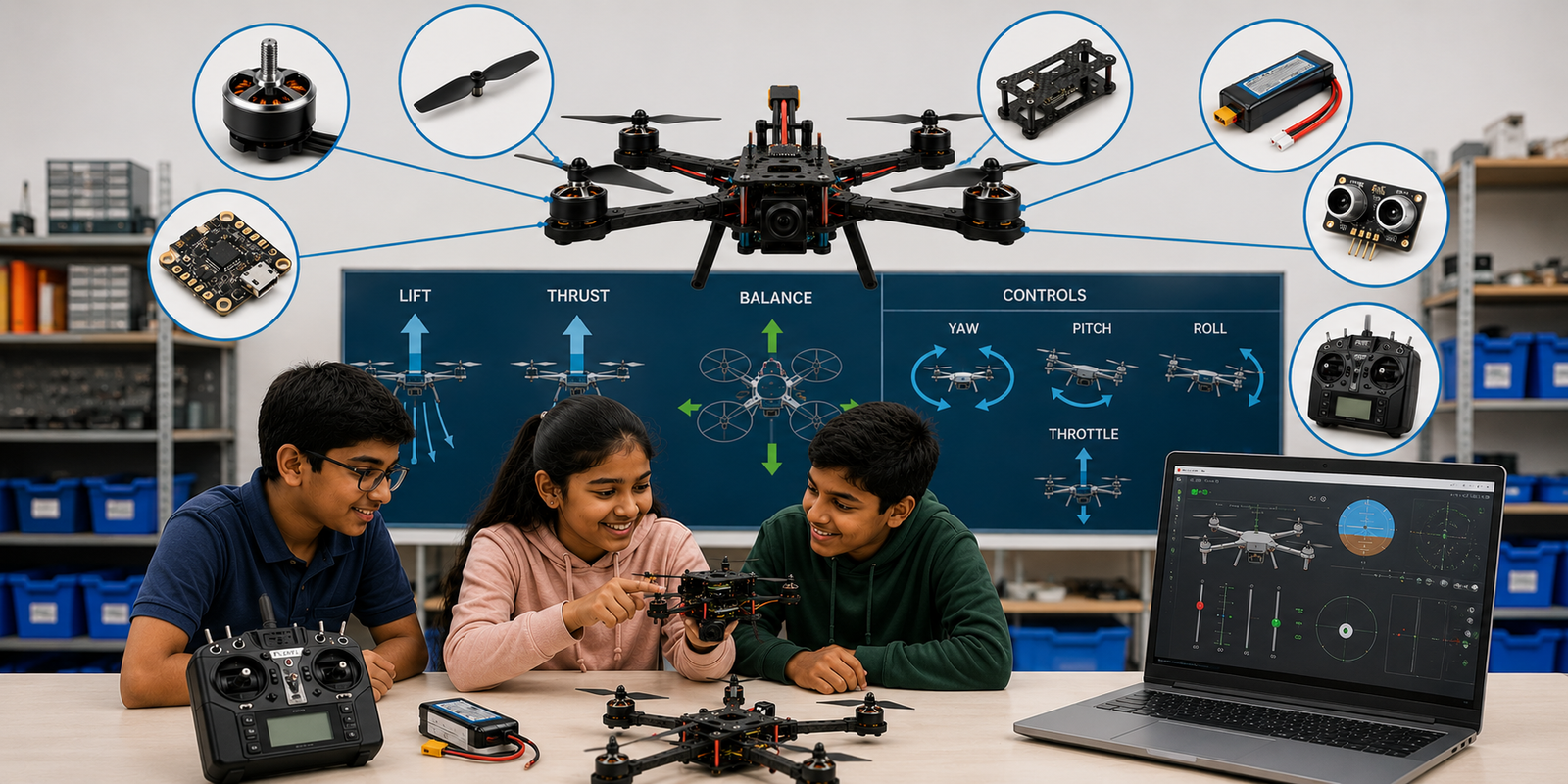
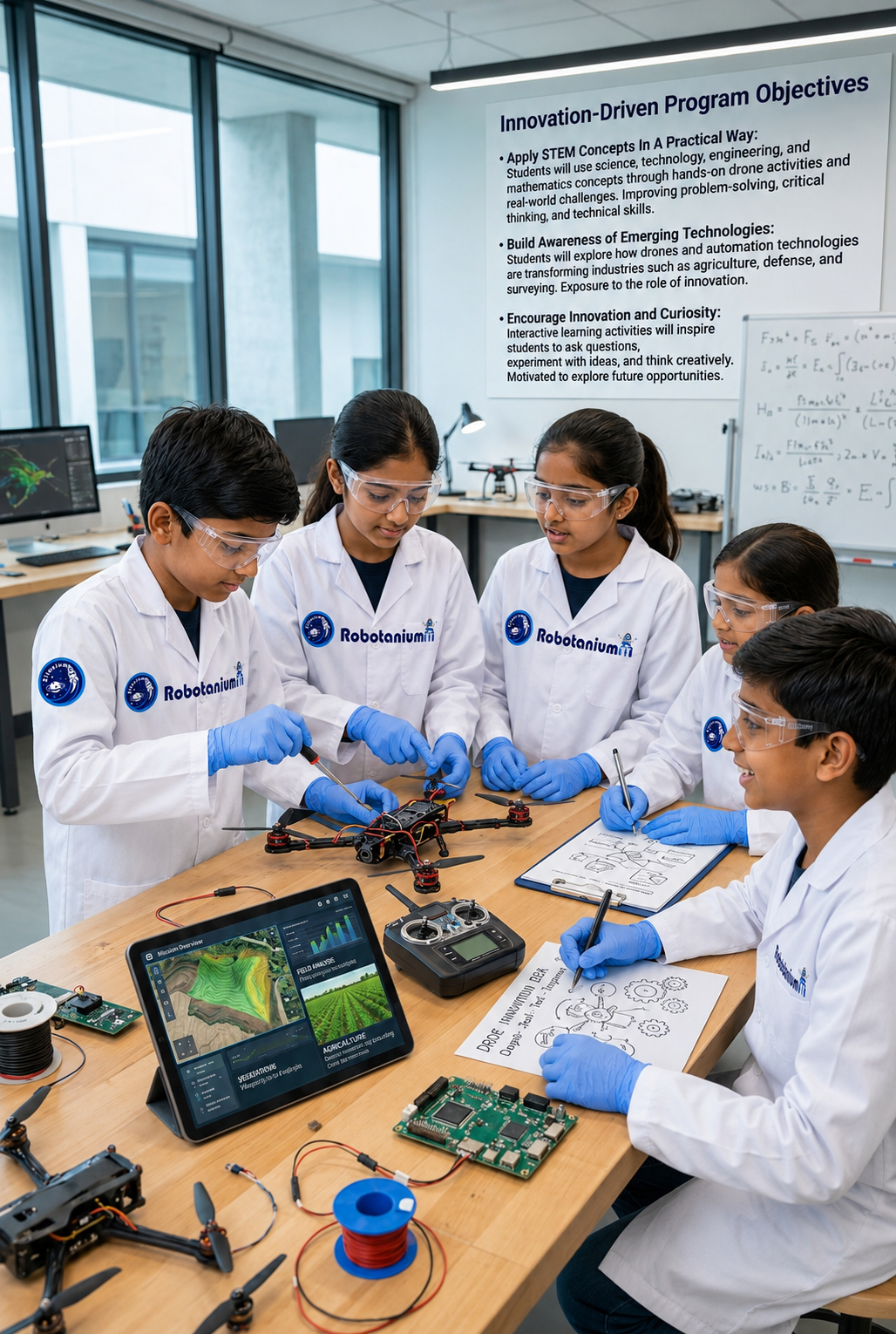
Step into the fascinating world of drones, rockets, and aerospace innovation through an exciting hands-on STEM learning experience designed for young explorers and future innovators. This program introduces students to the science behind flight — how drones fly, how rockets launch, and how modern aerial technologies are transforming industries and space exploration. Through interactive demonstrations, working models, and engaging activities, students will explore the principles of aerodynamics, including lift, thrust, drag, and balance.

The program encourages creativity, problem-solving, and practical STEM learning while helping students develop curiosity, teamwork, and scientific thinking. By connecting classroom concepts with real-world applications, the program inspires students to explore future-ready skills in aviation, robotics, and space science.

Every Part Tells a Flight Story.

Click through the anatomy of a quadcopter — from props to payload — and see exactly what keeps it in the air.

Quadcopter // Component Index
Click any part to inspect
PROP FC CAM GPS BATT
NO COMPONENT SELECTED
— click any highlighted part —

Drone Program Overview

Discover the exciting world of drones through an engaging, hands-on learning experience designed to introduce students to modern aerial technology and the science of flight.

What Is a Drone?

Learn what drones are, how they operate, and why they are becoming an important part of today’s technology. Students will explore different types of drones and their basic functions.

Drone Parts And Controls

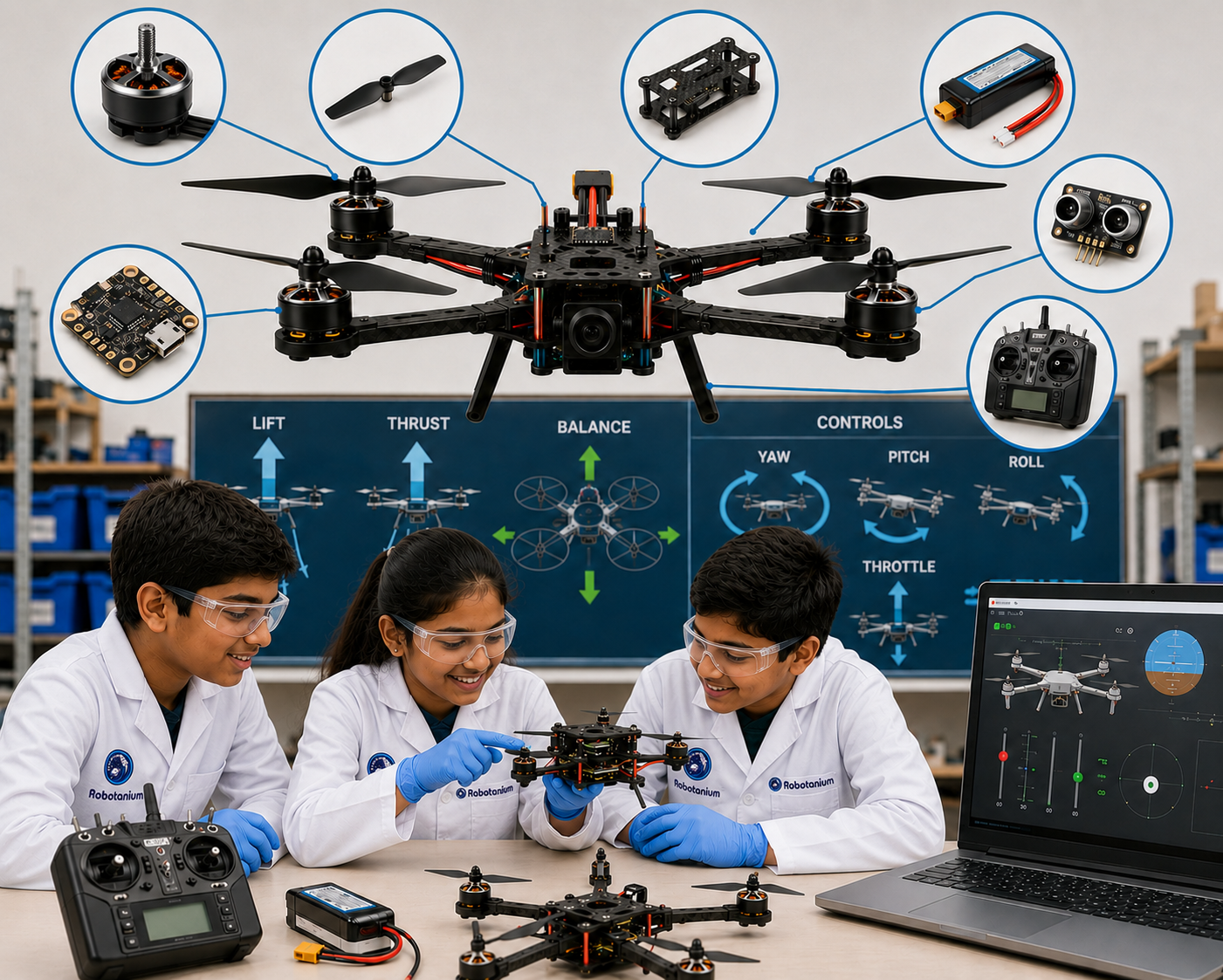
Understand the key components of a drone, including motors, propellers, batteries, sensors, and controllers. Students will also learn how pilots control drone movement and navigation.

Basics of Flight: Lift, Thrust, and Drag

Explore the science behind how drones fly by understanding essential aerodynamic principles such as lift, thrust, drag, and balance through simple demonstrations and activities.

Real-Life Applications of Drones

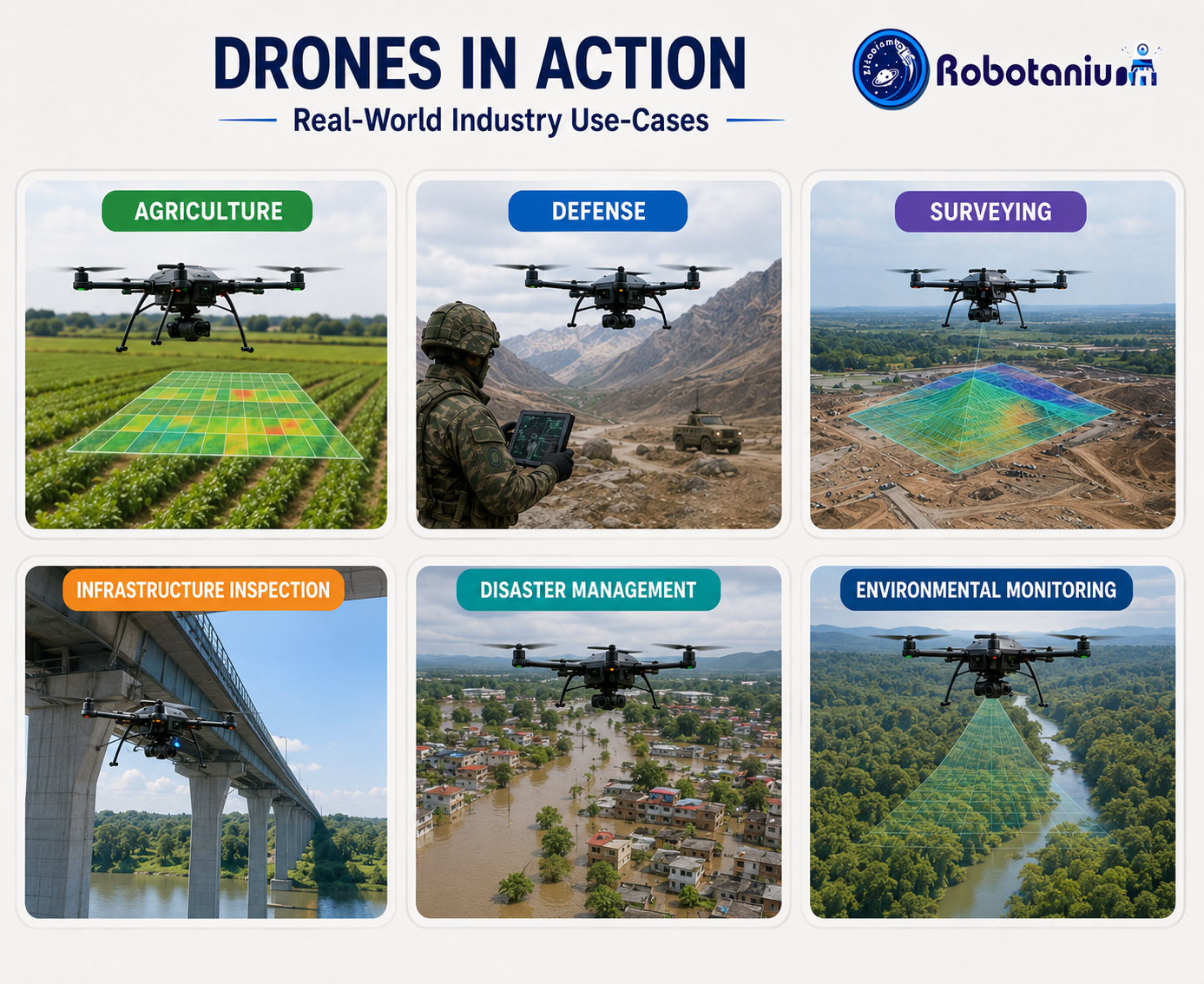
Discover how drones are used in real-world industries such as Agriculture, Photography, delivery services, disaster management, surveillance, and Aerospace Engineering—showing students the future possibilities of drone technology.

What Students Will Learn

Drone Structure and Flight Principles

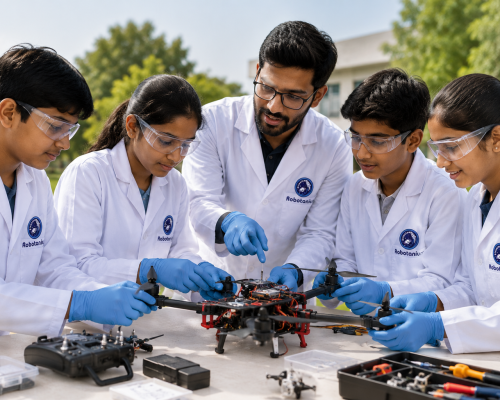
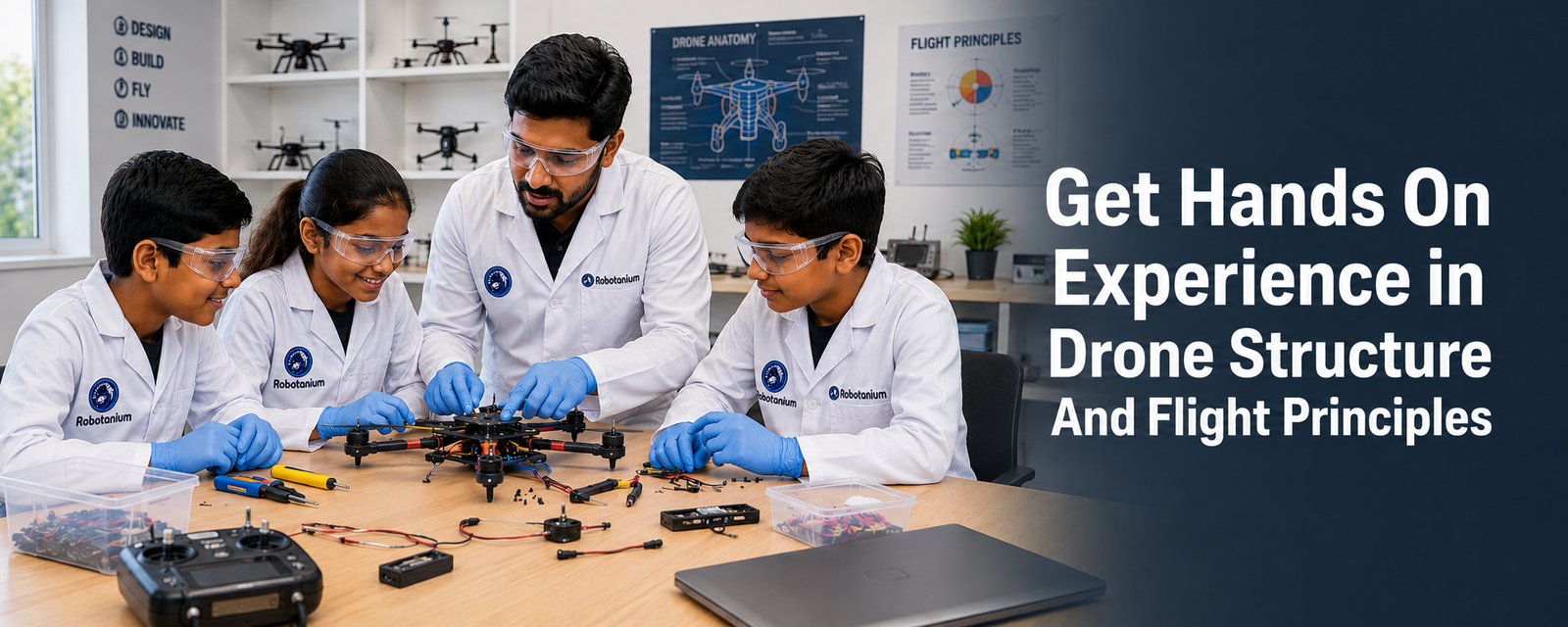
Students will learn about the important parts of a drone, including motors, propellers, batteries, and sensors. They will understand how drones fly using the principles of lift, thrust, drag, and balance. Interactive demonstrations will explain how drone controls affect movement and stability in the air. Students will observe how drones hover, rotate, ascend, descend, and change direction during flight. The program will introduce basic aerodynamics and the science behind modern drone technology. Hands-on activities will help students connect theoretical concepts with practical flight operations.

Industry Use-Cases: Agriculture, Defense, Surveying

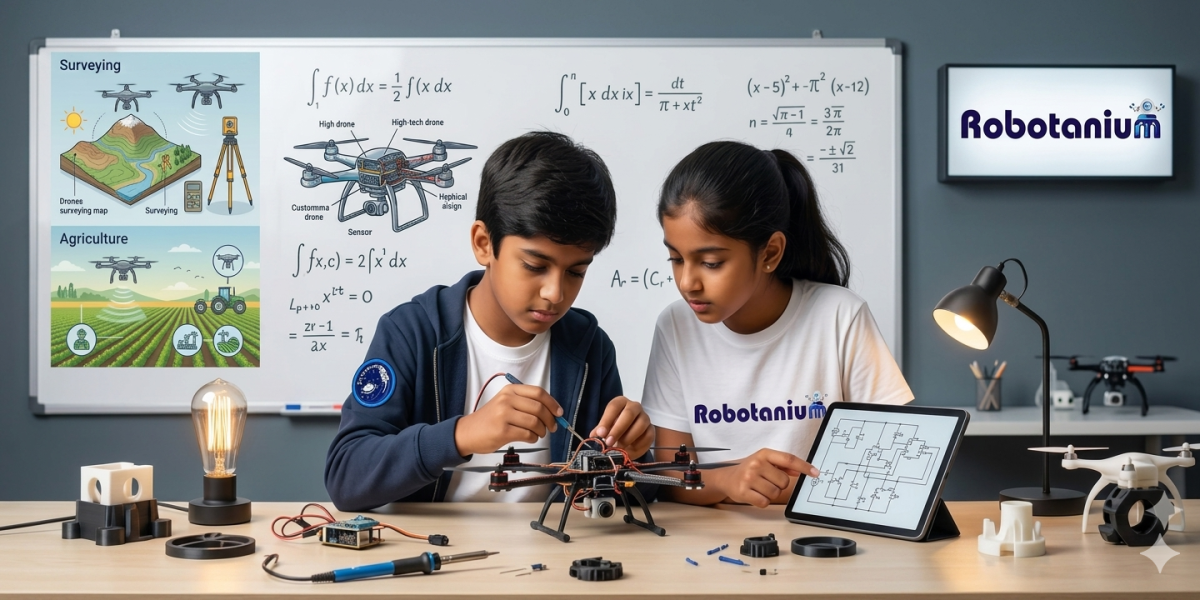
Students will explore how drones are used in agriculture for crop monitoring and field management. They will learn how drones support defense operations through surveillance and aerial observation. The session will explain the role of drones in land surveying, mapping, and construction planning. Real-world examples will demonstrate how drones improve speed, safety, and efficiency across industries. Students will understand how aerial data collection helps professionals make accurate decisions. These applications will show the growing importance of drones in modern technology and innovation.

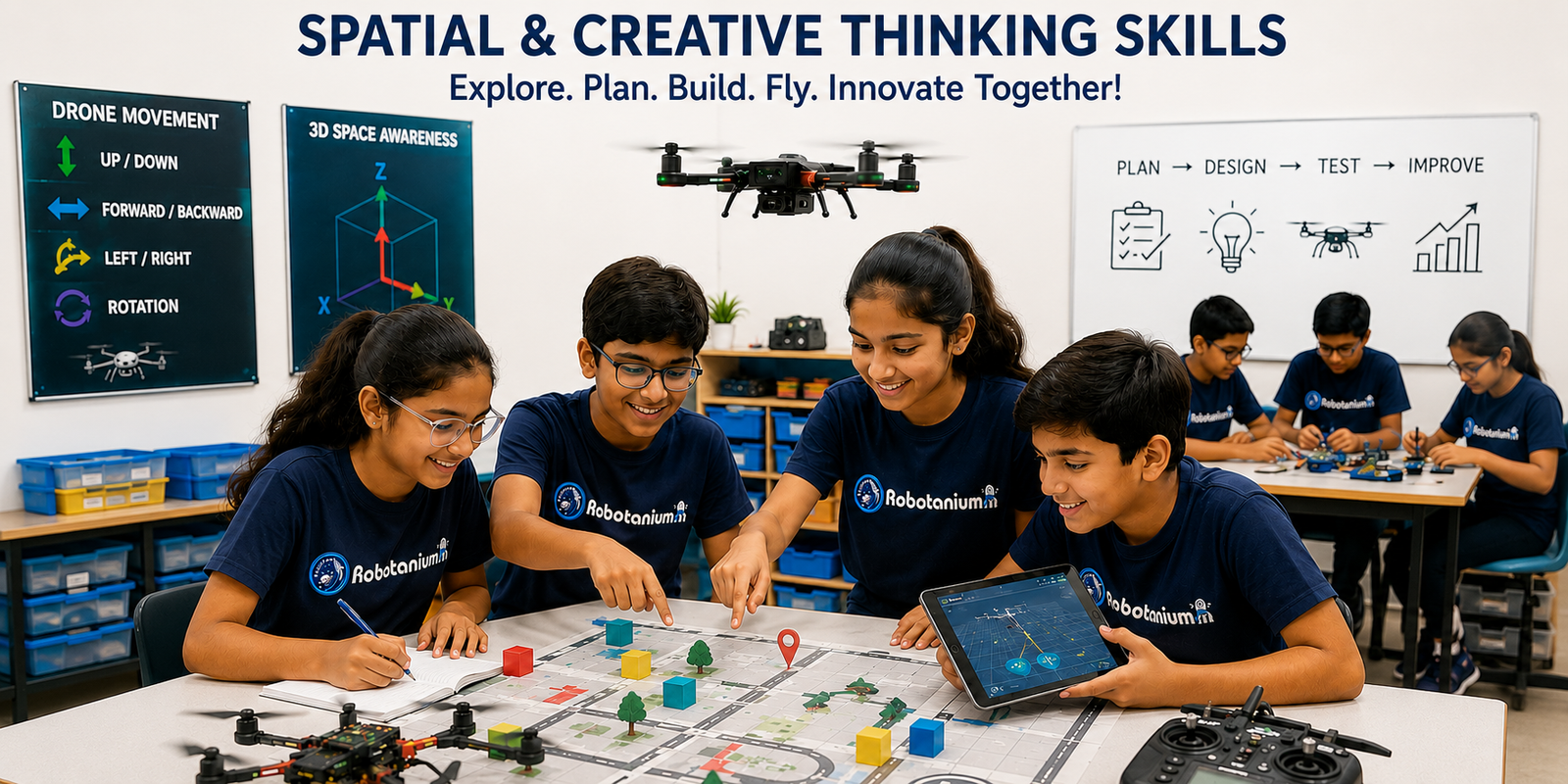
Spatial and Creative Thinking Skills

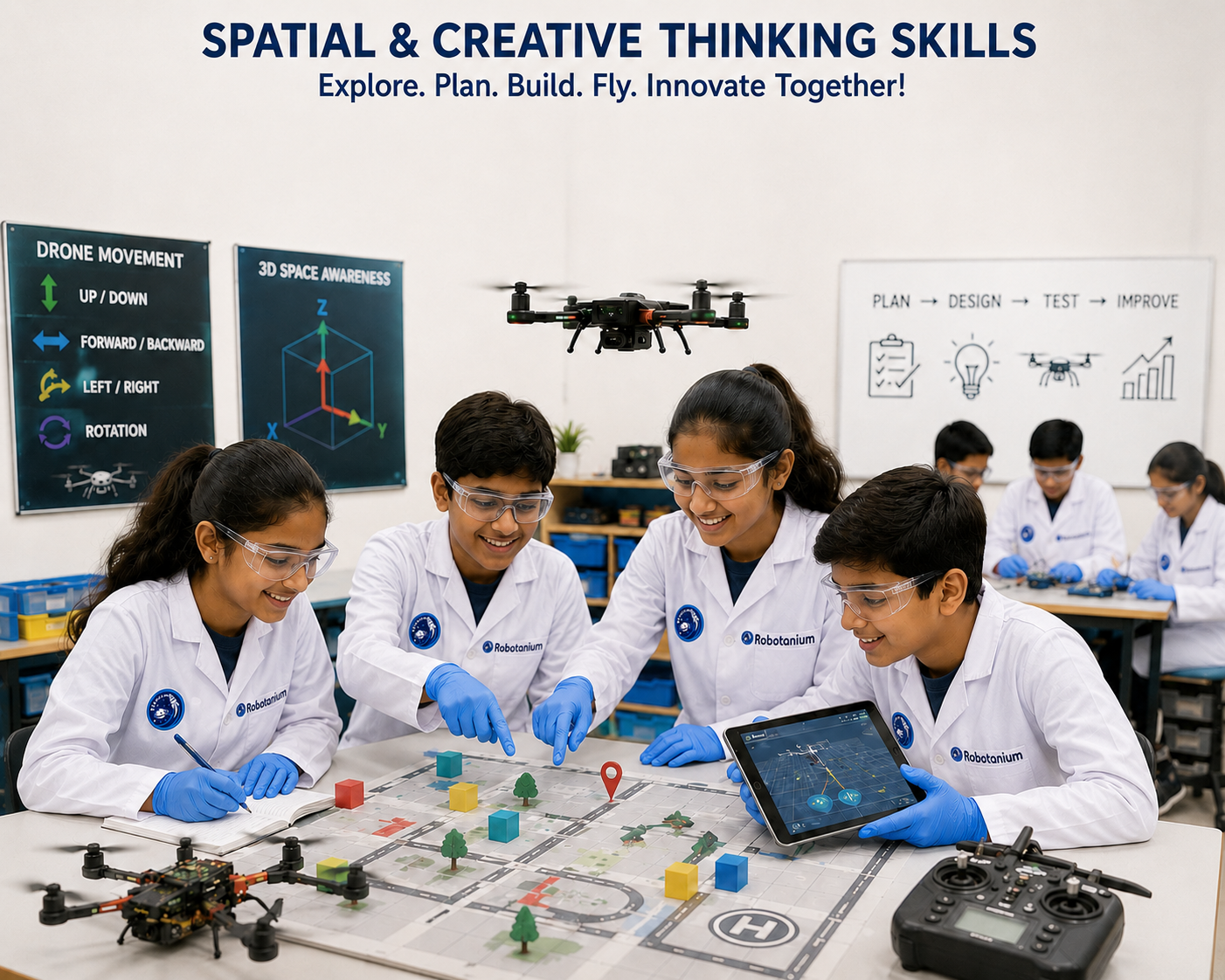
Students will develop spatial awareness through drone observation and interactive learning activities. They will improve their understanding of direction, movement, distance, and positioning in space. Creative challenges will encourage logical thinking and problem-solving using drone concepts. Hands-on experiences will strengthen coordination, planning, and decision-making abilities. Students will work on activities that promote teamwork, communication, and innovative thinking. These exercises will help build confidence and curiosity while making STEM learning engaging and practical.

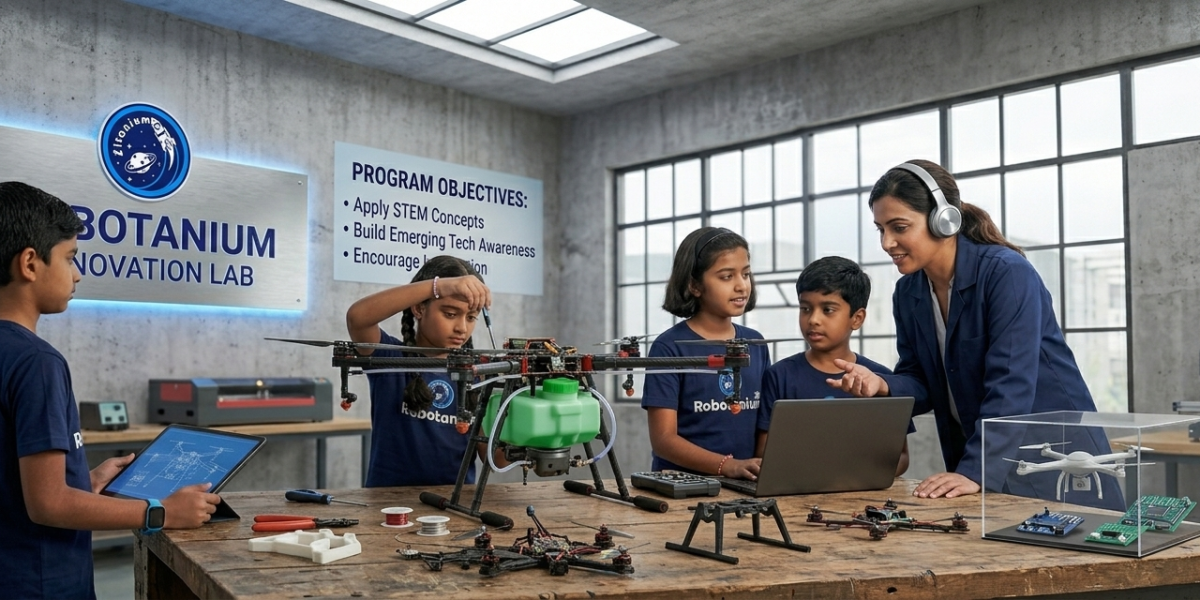
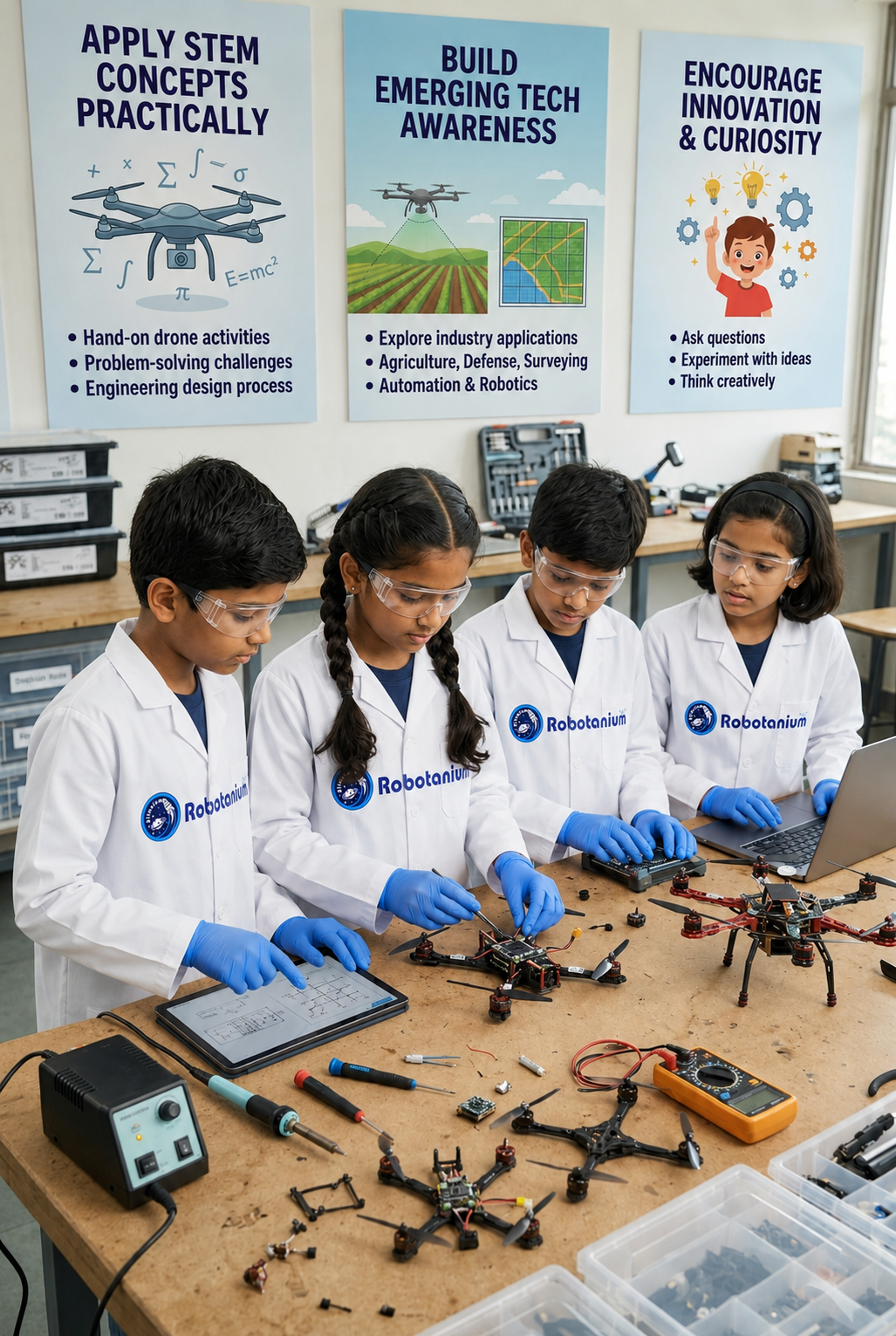
Innovation-Driven Program Objectives

Why Choose Robotanium?

Hands-on Drone Learning

Students actively learn by flying drones, performing tasks, and participating in practical activities.

Experienced STEM Trainers

Our expert instructors simplify complex concepts through fun and engaging teaching methods.

Safe Learning Environment

Workshops are conducted with proper safety guidance and supervised hands-on sessions.

Creativity & Problem-Solving Skills

Activities encourage students to think critically, innovate, and solve challenges creatively.

Real-World Industry Exposure

Students discover how drones are used in agriculture, defense, surveying, and other industries.

Future-Ready Technology Skills

The program introduces emerging technologies that prepare students for future STEM careers.

Quality Equipment & Resources

Students learn using professional training drones and interactive educational materials.

Confidence & Curiosity Building

The workshop inspires students to explore technology with confidence and curiosity

Fun & Interactive Experience

Learning is made exciting through teamwork, challenges, and engaging drone activities

Drone Learning Pathway

Students progress through a structured learning journey that develops engineering, coding, and aerospace skills through hands-on drone projects.

1. Beginner Level

Discover the fundamentals of drone technology and safe operation.

Intermediate Level

Build, configure and fly real drones through hands-on projects

Advanced Level

Develop intelligent autonomous drones powered by AI and vision systems.

Student Projects Showcase

Students learn by designing, building, programming, and testing drone-based projects that develop engineering, coding, and problem-solving skills while exploring real-world drone applications.

Obstacle Avoidance Drone

Students Explore:

warehouse automation

Autonomous drones

inspection systems

smart robotics.

FPV Racing Drone

Students Explore:

Competitive drone racing

aerial cinematography

defence training

drone sports

Drone Mapping System

Students Explore:

Land surveying

construction planning,

environmental studies

infrastructure development

Drone Classroom Infrastructure

Experience hands-on learning where students build, code, test, and fly drones in a modern STEM environment, developing practical engineering, aviation, and problem-solving skills.

Drone Assembly Lab

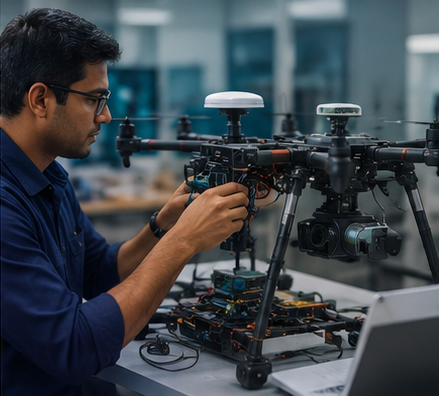
Build and assemble drones using professional tools, motors, propellers, flight controllers, and electronic components while learning the fundamentals of UAV engineering.

Flight Simulation Studio

Master drone piloting in a virtual environment with advanced flight simulators, allowing students to practise navigation, manoeuvres, and emergency procedures safely.

Indoor Flight Arena

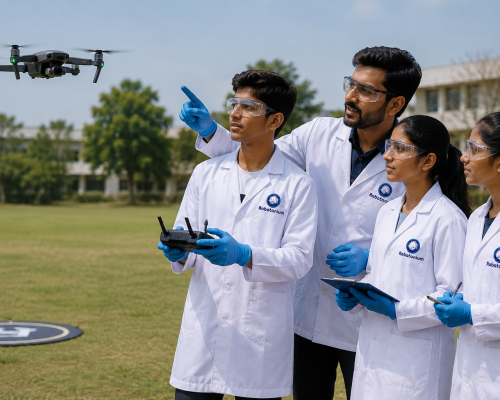
Experience real-time drone flying in a dedicated indoor training zone featuring safety nets, landing pads, obstacle courses, and instructor-guided flight sessions.

Programming & AI Lab

Program autonomous drones using Python and block-based coding while exploring artificial intelligence, computer vision, and intelligent flight algorithms.

Electronics & Repair Station

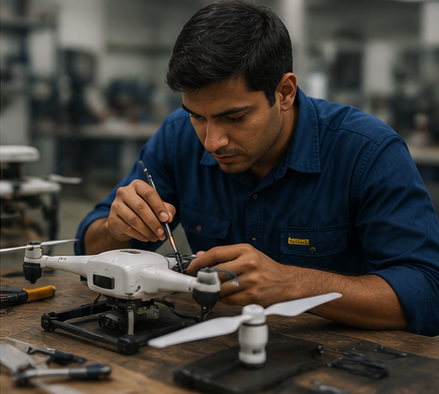
Learn drone maintenance by testing motors, calibrating sensors, troubleshooting electronic systems, replacing components, and ensuring peak flight performance.

Mission Planning & Mapping Centre

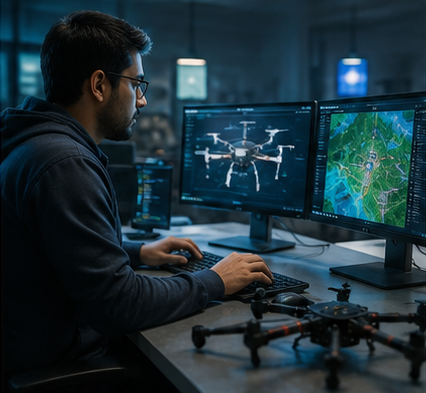
Plan autonomous missions, create flight paths, analyse telemetry, and explore aerial surveying, GPS navigation, and mapping technologies.

Design & Prototyping Hub

Transform ideas into reality by designing custom drone parts with CAD software and manufacturing prototypes using advanced 3D printing technology.

Innovation & Application Zone

Discover real-world drone applications through exciting projects in agriculture, disaster response, environmental monitoring, smart cities, aerial photography, and logistics.

Drone Missions & Challenges

Learning becomes more meaningful when students apply their knowledge to solve practical challenges. In Robotanium’s Drone Workshops, students participate in engaging drone missions that simulate real-world applications across industries such as agriculture, logistics, disaster management, and environmental monitoring.

Search & Rescue Mission

Locate. Navigate. Rescue.

Students pilot and program drones to locate targets in simulated rescue zones while learning navigation, aerial observation, mission planning, and real-world emergency response applications.

Smart Delivery Challenge

Deliver with Precision.

Students plan flight routes and operate drones to deliver payloads to target locations while exploring drone logistics, automated delivery systems, and autonomous transportation technologies.

Agri. Survey Mission

Farming from the Sky.

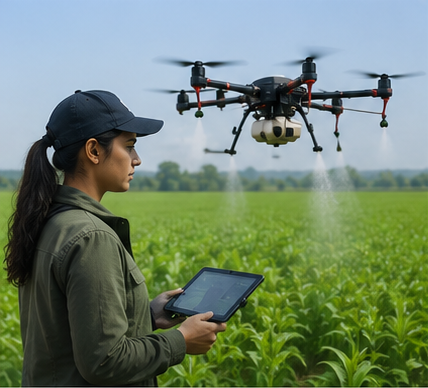
Students use drones to survey crop fields, identify problem areas, and explore how UAVs support precision farming through crop monitoring, improved productivity, and efficient resource management.

Aerial Photography Expedition

Capture the World from Above.

Students operate camera-equipped drones to capture aerial images and videos while learning photography techniques and exploring applications in media, filmmaking, tourism, and event coverage.

Environmental Monitoring Mission

Protecting Nature by Technology.

Students use drones to survey environments, monitor vegetation, and analyse terrain data while exploring their role in wildlife conservation, environmental research, and climate monitoring.

Smart City Inspection Challenge

Building Smarter Communities.

Students use drones to inspect buildings, roads, and infrastructure while learning how UAVs help engineers collect data, improve safety, and support smart city development.

Future Careers in Drones

Discover how drone technology is transforming industries and creating high-demand opportunities for the next generation.

Photo 1
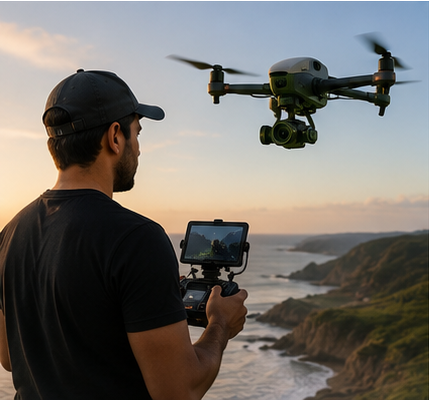
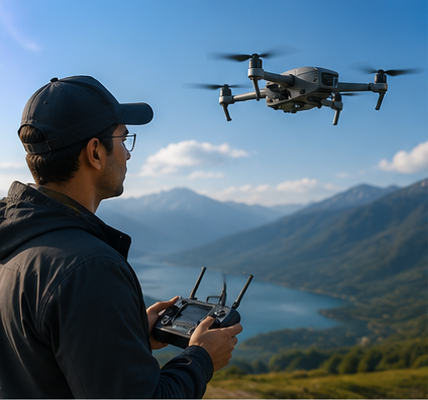
Operate drones for photography, inspections, surveys, agriculture, and commercial projects.
Drone Pilot
Photo 2
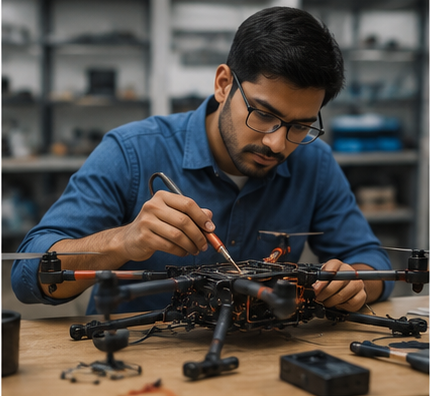
Design and develop drone airframes, propulsion systems, electronics, and flight-control systems.
Drone Design Engineer
Photo 3
Integrate sensors, communication systems, navigation, and autonomous flight technologies into drones.
UAV Systems Engineerr
Photo 4
Use drones for crop monitoring, spraying, precision farming, yield analysis, and pest detection.
Agricultural Drone Specialist
Photo 5
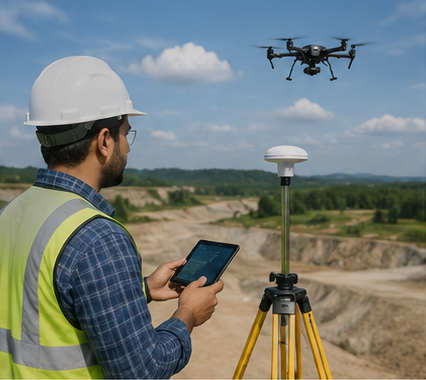
Create high-precision maps, 3D models, and land surveys using drone-captured data.
Drone Mapping & GIS Specialist
Photo 6
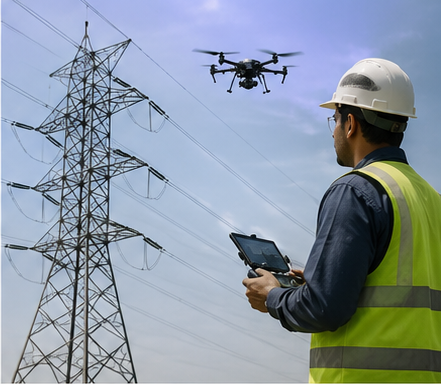
Inspect power lines, solar plants, wind turbines, bridges, pipelines, and industrial infrastructure.
Drone Inspection Engineer
Photo 7
Capture cinematic footage for films, real estate, tourism, sports, events, and media production.
Aerial Photography Specialist
Photo 8
Develop AI-powered drones capable of autonomous navigation, object detection, and swarm operations.
Autonomous Drone Developer
Photo 9
Diagnose, repair, upgrade, and maintain drones for commercial operators and organizations.
Drone Maintenance & Repair Technician

Drones Are Transforming Industries

Discover How Drone Technology Is Shaping the Future

From monitoring crops and inspecting infrastructure to delivering packages and supporting disaster relief, drones are revolutionizing industries across the world. Through Robotanium’s Drone Workshops, students explore how UAV technology is solving real-world challenges and creating exciting career opportunities in the future.

Agriculture

Smart Farming from the Sky

Drones help farmers monitor crop health, detect plant diseases, assess irrigation needs, and improve agricultural productivity through aerial surveys and data-driven insights.

Applications

Construction

Building Faster and Smarter

Construction companies use drones to survey sites, track project progress, inspect structures, and create accurate 3D models for planning and development.

Applications

Defence & Security

Enhancing Safety and Surveillance

Drones support border surveillance, reconnaissance missions, search operations, and security monitoring while providing valuable real-time information.

Applications

Environmental Monitoring

Protecting Nature with Technology

Researchers use drones to monitor forests, track wildlife, study ecosystems, and collect environmental data without disturbing natural habitats.

Applications

Logistics & Delivery

The Future of Smart Transportation

Drone delivery systems are transforming how goods, medicines, and emergency supplies reach customers quickly and efficiently.

Applications

Media & Filmmaking

Capturing Stunning Aerial Perspectives

Drones have become essential tools for photographers, filmmakers, broadcasters, and content creators seeking dynamic aerial footage.

Applications

Frequently Asked Questions

Do students get to build and fly a real drone?

Yes. Students assemble drone components, understand how each part works, and participate in supervised flight sessions to gain practical experience.

The workshop can be customized for different age groups, typically from Grade 5 onwards, with activities adjusted to match students’ learning levels.

No. The program is designed for beginners and starts with drone fundamentals before progressing to assembly, programming, and flight operations.

Workshops can range from a few hours to multiple days depending on the school’s requirements, learning objectives, and student age group.

Simply contact Robotanium to schedule a consultation. Our team will assess your requirements and recommend the best workshop or Drone Lab setup for your institution.

Ready to Launch Future Drone Innovators?

Start Drone Education Today

Build future-ready skills with hands-on drone and UAV learning.